By CPUGAD TBI
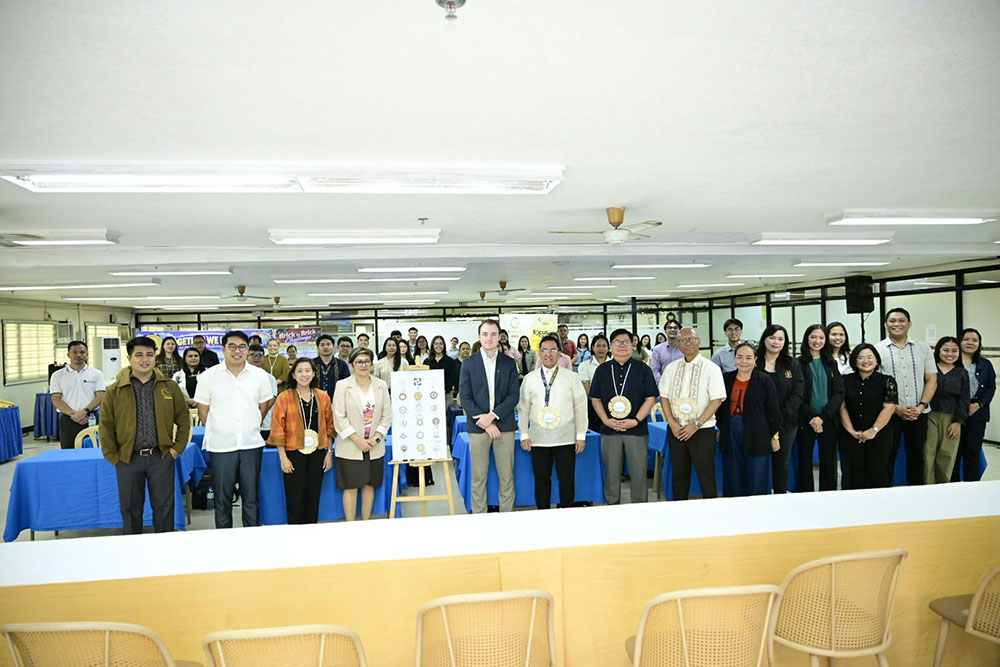
Central Philippine University (CPU) officials, representatives from participating State Universities and Colleges (SUCs), Higher Education Institutions (HEIs), and technology transfer offices (TTOs) gather for a photo during the N-VEST PH Tech Transfer Masterclass: IP Commercialization and University Startup Development with University of Texas at Austin (UT Austin)/ Texas Innovation Center (TXiC) held at the CPU Henry Luce III Library Conference Room.
ILOILO CITY, Philippines — Advancing the transformation of university research into commercially viable technologies, innovative startups, and industry-ready solutions, Central Philippine University (CPU) hosted the N-VEST PH Tech Transfer Masterclass: IP Commercialization and University Startup Development with the University of Texas at Austin (UT Austin) / Texas Innovation Center (TXiC) on November 9–11, 2026.
The three-day international learning and collaboration initiative brought together leaders and representatives from higher education institutions (HEIs), state universities and colleges (SUCs), technology transfer offices (TTOs), and innovation organizations across the Visayas and Mindanao. The masterclass aimed to strengthen institutional capabilities in intellectual property (IP) management, technology transfer, research commercialization, and university startup and spin-off development.
The event was facilitated by CPU through its CPUGAD Technology Business Incubator (CPUGAD TBI) and the IMPACT NXT–CPU Project, under the IP Management Program for Academic and Research Institutions Commercializing Technologies (IMPACT). The initiative supports the University’s continuing efforts to strengthen its institutional technology transfer ecosystem and accelerate the commercialization of university-generated research and innovations.
Beyond knowledge sharing, the initiative sought to equip participating institutions with practical frameworks and actionable strategies to bridge the gap between academic discoveries and market applications, strengthening the role of universities as drivers of innovation, entrepreneurship, and economic development.
Strengthening International Partnerships for Technology Commercialization
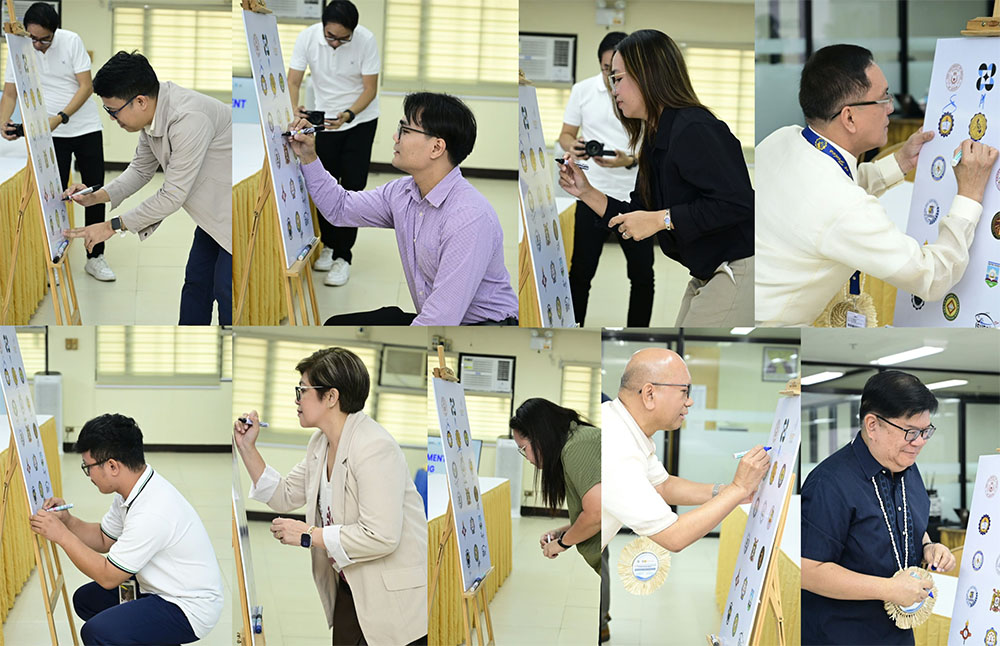
Representatives from participating State Universities and Colleges (SUCs) and Higher Education Institutions (HEIs) sign a commitment to support Technology Transfer and Commercialization during the N-VEST PH Tech Transfer Masterclass: IP Commercialization and University Startup Development with UT Austin / TXiC.
The masterclass officially opened on November 9, 2026, with welcome remarks from Central Philippine University President Rev. Dr. Ernest Howard B. Dagohoy, followed by messages from Engr. Rowen R. Gelonga, Regional Director of the Department of Science and Technology–Western Visayas (DOST Region VI), and Dr. Gabriel M. Salistre, Jr., President of Iloilo Science and Technology University (ISAT U). The opening program underscored the importance of strengthening collaboration among government agencies, academic institutions, and international partners to advance technology transfer, research commercialization, and university-based innovation.
A major highlight of the opening program was the signing of a Memorandum of Understanding (MOU) among the University of Texas at Austin (UT Austin), through its Texas Innovation Center (TXiC); Central Philippine University (CPU); Department of Science and Technology–Western Visayas (DOST Region VI); Iloilo Science and Technology University (ISAT U); and University of Science and Technology of Southern Philippines (USTP).
The partnership marked a significant milestone in fostering international and inter-institutional collaboration to strengthen university technology transfer, intellectual property management, research commercialization, and startup and spin-off development.
By bringing together international expertise, government support, and the research and innovation capabilities of Philippine higher education institutions, the collaboration seeks to advance institutional capacity-building, facilitate knowledge exchange, and create opportunities for translating university-generated technologies into commercially viable products, enterprises, and solutions that address industry and societal needs.
The MOU signing was followed by a commitment signing among participating SUCs and HEIs, reinforcing their collective resolve to establish stronger institutional mechanisms for technology transfer and commercialization.
Learning from the UT Austin Technology Transfer Model Leading the technical sessions was Mr. Ian Howard, New Venture Specialist at the Texas Innovation Center, University of Texas at Austin, who shared insights into the United States’ university technology transfer ecosystem and approaches to bringing academic innovations to market.
His keynote session, The U.S. University Tech Transfer Model, examined the Bayh–Dole framework, the organizational structures of technology transfer offices, and lessons from UT Austin’s experience in supporting university innovation and commercialization.
In the succeeding session, From Invention Disclosure to License, Howard discussed essential commercialization processes, including intellectual property evaluation, patenting strategies, and licensing deal structures. The discussions highlighted how universities can systematically identify research outputs with commercial potential, protect intellectual property, and pursue opportunities for industry adoption and technology licensing.
The first day also featured a panel discussion on University Tech Transfer in the Visayas and Mindanao, bringing together representatives from CPU, ISAT U, USTP, and partner technology transfer offices.
The discussion provided a platform for institutions to share existing practices, examine operational challenges, and identify opportunities for strengthening technology transfer and commercialization systems within their respective universities.
Building Institutional Readiness and Commercialization Roadmaps
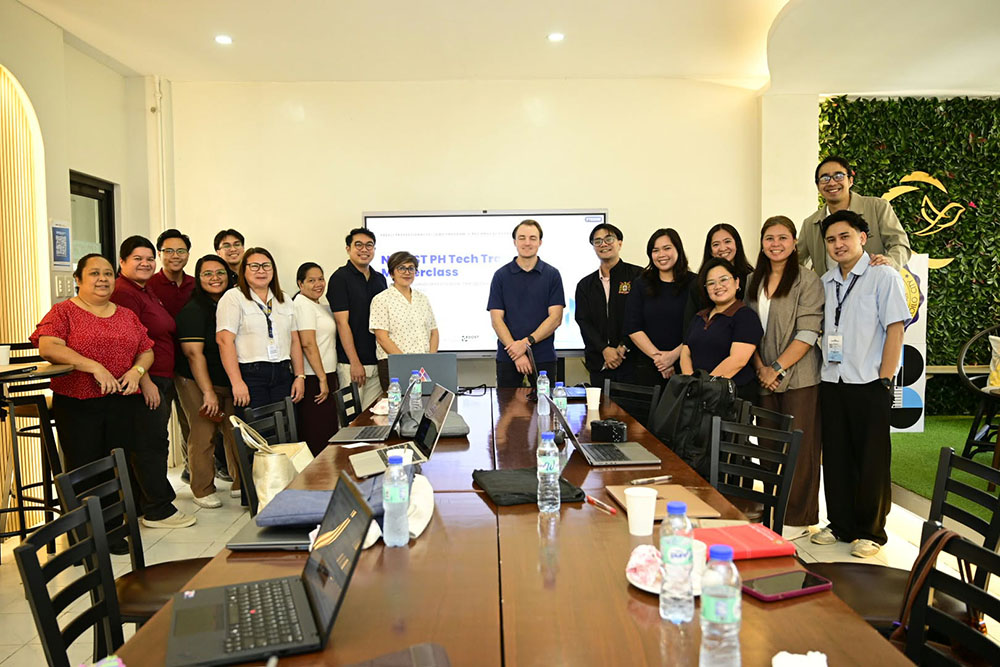
Representatives from participating institutions, together with Mr. Ian Howard of Texas Innovation Center and Technology Transfer Office (TTO) heads, pose for a group photo following the coaching session of the N-VEST PH Tech Transfer Masterclass: IP Commercialization and University Startup Development with UT Austin/TXiC at the CPUGAD TBI Co-Working Space.
On November 10, the masterclass shifted its focus to the Philippine technology transfer landscape, institutional readiness, and pathways for establishing research-based enterprises.
Representatives from the DOST Technology Transfer and Management Unit (TTMU) discussed the country’s policy and regulatory environment, including Republic Act No. 10055, or the Philippine Technology Transfer Act of 2009; Republic Act No. 11293, or the Philippine Innovation Act; and Republic Act No. 11337, or the Innovative Startup Act.
Discussions also highlighted the Innovation and Technology Support Office (ITSO) network and university spin-off policies, emphasizing the importance of institutional frameworks in enabling research commercialization.
During the Institutional IP Readiness Assessment Workshop, facilitated by Howard and the N-VEST PH team, participating university delegations assessed the maturity of their technology transfer systems, examined existing capabilities, and identified areas requiring institutional development.
Howard subsequently led the session Venture Creation from University Research, exploring approaches to university spin-off formation, equity arrangements, and non-dilutive funding mechanisms, including the U.S. Small Business Innovation Research (SBIR) and Small Business Technology Transfer (STTR) programs.
A key output of the second day was the Building Your Commercialization Roadmap Workshop, where participating institutions developed their respective 12-month action plans for strengthening technology transfer operations and advancing research commercialization.
The activity translated the masterclass discussions into institution-specific priorities, providing participating universities with a practical direction for building more sustainable and responsive innovation ecosystems.
From Learning to Action: Startup Coaching and Incubation Exposure
The final day, November 11, placed particular emphasis on applying commercialization strategies through direct mentorship, institutional exchange, and exposure to university incubation programs.
Howard, together with participating technology transfer office heads, conducted one-on-one startup coaching sessions for pre-screened university startups and spin-offs. These sessions provided opportunities to examine commercialization pathways, venture development strategies, and challenges in bringing research-based innovations to market.
A parallel roundtable discussion among TTO delegates, held at the CPUGAD TBI Co-working Space, provided a venue for exploring institutional collaboration, identifying shared challenges, and strengthening connections among universities engaged in technology transfer.
Participants also visited the CPUGAD Technology Business Incubator at CPU and the incubation facilities of ISAT U, gaining firsthand insights into startup incubation operations, entrepreneurial support mechanisms, and university-led innovation development.
The three-day masterclass concluded with the presentation of institutional commercialization roadmap highlights, commitments toward the forthcoming Tech Transfer Summit, and the awarding of certificates to participants.
Advancing CPU’s Research Commercialization and Innovation Agenda
CPU’s hosting of the N-VEST PH Tech Transfer Masterclass reflects its continuing commitment to strengthening the connection between academic research, technological innovation, entrepreneurship, and industry development.
The initiative aligns with the University’s broader innovation and commercialization agenda, particularly through the CPUGAD Technology Business Incubator and the IMPACT NXT–CPU Project.
Through CPUGAD TBI, CPU continues to nurture technology-driven startups, support entrepreneurial initiatives, and facilitate the development of innovative solutions with market potential. Complementing these efforts, IMPACT NXT–CPU seeks to strengthen the University’s intellectual property management and knowledge and technology transfer capabilities, enabling a more systematic approach to protecting, managing, and commercializing research outputs.
Together, these initiatives support the development of an integrated university innovation ecosystem where research, intellectual property, technology transfer, startup incubation, and industry collaboration can contribute to sustainable enterprise development.
By facilitating international knowledge exchange, strengthening inter-institutional partnerships, and supporting the development of practical commercialization roadmaps, CPU contributes to building a more connected and capable technology transfer ecosystem in the Philippines.
More than a three-day learning engagement, N-VEST PH reinforced a shared vision among participating institutions: that university research should not end with discovery or publication, but should progress toward innovation, enterprise creation, and meaningful impact on communities and industries.
Through collaborations such as N-VEST PH, CPU continues to strengthen its position as an active contributor to the region’s growing innovation ecosystem—transforming knowledge into technologies, technologies into enterprises, and enterprises into opportunities for sustainable economic and societal development.