By Roselle Mitch G. Anas
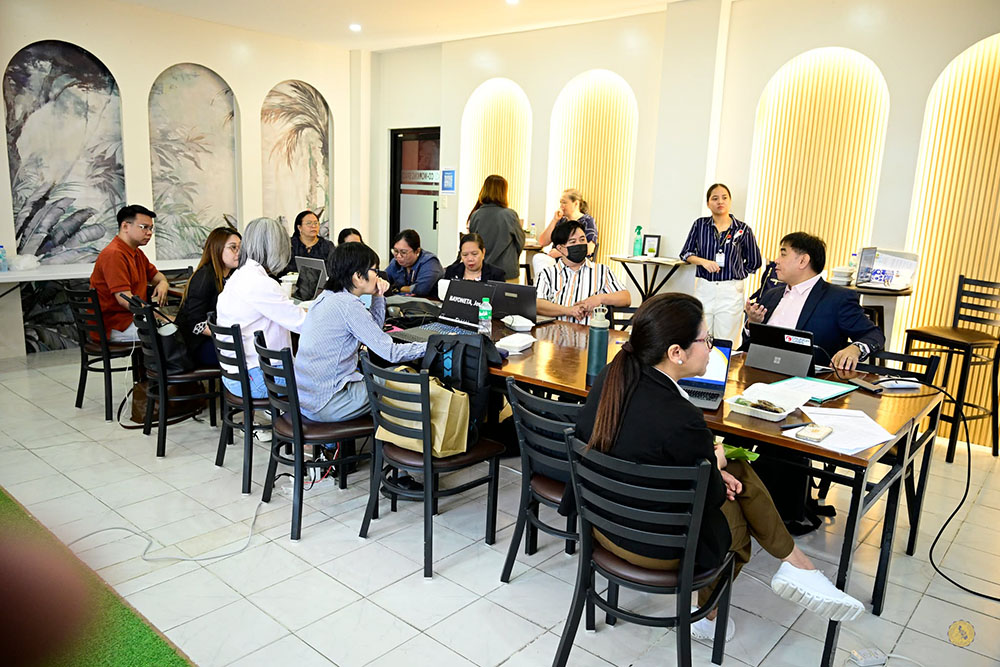
Visiting Professor Dr. Michael Lochinvar S. Abunando shares insights on developing research proposals aligned with potential funding opportunities during the DOST DPMIS Training and Proposal Readiness Workshop held at CPUGAD TBI Co-Working Space.
Central Philippine University (CPU) held a Proposal Readiness Workshop on November 25, 2026, at the CPUGAD TBI Co-Working Space to help faculty prepare proposals for external funding. The Office of the Vice President for Research, Development, and Extension (OVPRDE) and the University Research Center organized the workshop, which included hands-on training in the Department of Science and Technology’s (DOST) Project Management Information System (DPMIS).
The workshop formally started with an opening remark from Dr. Aries Roda D. Romallosa, Vice President for Research, Development, and Extension (VPRDE), followed by her introduction of Engr. Yeseil S. Sacramento, Project Staff of CPUGAD TBI and Chairperson of the Department of Electronics Engineering, as the resource speaker and facilitator.
The workshop featured sessions from the Department of Science and Technology (DOST) funding requirements and an overview of the DOST Project Management System (DPMIS), along with guided demonstrations and hands-on exercises on proposal encoding and submission. During Session 1, Engr. Sacramento discussed insights on developing competitive proposals, common requirements, and considerations in preparing DOST-funded research proposals.
Dr. Romallosa also introduced Visiting Professor Dr. Michael Lochinvar S. Abundo, whose expertise and engagement support the University’s efforts to strengthen faculty research participation and foster research collaborations.
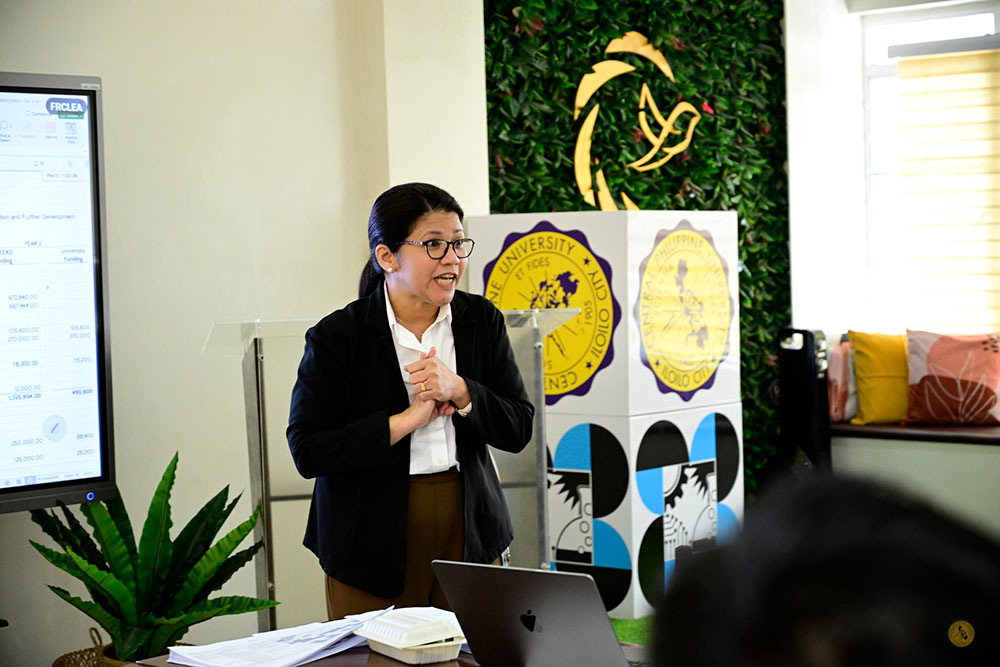
Engr. Yeseil S. Sacramento, Resource Person and Facilitator Chairperson discusses developing competitive proposals, common requirements, and considerations in preparing DOST-funded research proposals.
Dr. Abundo, Chief Executive Officer (CEO) of a spinoff company OceanPixel, shared the company’s mission and projects, along with insights on developing research proposals aligned with potential funding opportunities from DOST.
To illustrate the importance of aligning research proposals with funding priorities, he presented an example involving the development of a boat engine. He explained that a proposal initially focused on a usual fuel-powered boat engine could be reframed to explore a solar-powered alternative, making the project more relevant to the interest and mandate of a potential solar energy company. He emphasized that this approach could improve the proposal’s potential to attract funding.
Session 2 focused on navigating the DPMIS platform, including encoding and submitting R&D and non-R&D project proposals, preparing Line Item-Budgets (LIBs), uploading supporting documents, and conducting compliance checks.
Participants sought guidance on proposal preparation and submission during an open forum and consultation. The workshop concluded with the awarding of certificates, closing remarks, and a group photo.
The workshop forms part of WEAVE, the OVPRDE’s program for strengthening faculty research and development at CPU. WEAVE brings together five areas of support: Workload Optimization, Expertise Enhancement, Access to Assets, Velocity Amplification, and Ecosystem Engagement. These areas focus on making time for research, developing faculty expertise, improving access to research resources, helping projects move forward, and building connections with partners.
The DPMIS workshop advances WEAVE’s Expertise Enhancement component by giving faculty practice in developing proposals, preparing budgets, and navigating submission requirements. These skills help faculty turn research ideas into complete proposals they can submit for external funding.