By Bryan Paul L. Espinosa
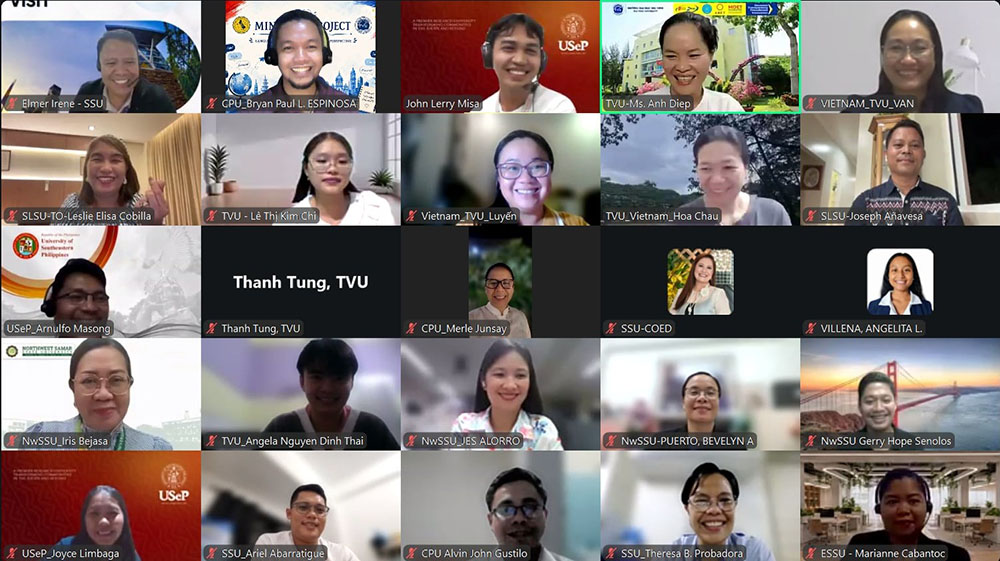
Participants from various higher education institutions in the Philippines and Vietnam engage in meaningful discussions, sharing best practices and exploring opportunities for global academic partnerships.
ILOILO CITY, Philippines — Representatives from universities across the Philippines and Vietnam connected online on October 29, 2026, to gain first-hand insights from facilitators of Collaborative Online International Learning (COIL) programs.
Titled “Connecting Educators and Learners Through COIL: Sharing Experiences, Building Global Partnerships,” the virtual session explored how cross-border collaboration enriches teaching and learning while enabling educators and students to weave meaningful intercultural connections.
The event provided a dynamic platform for participants to explore real stories, lessons learned, and best practices from various COIL projects. Among the key themes highlighted during the forum were the exploration of language attitudes in cross-cultural communication, the integration of Vietnamese–Philippine folk literature and English literature, the expansion of virtual exchanges into high school classrooms, and the enhancement of student learning motivation and Intercultural Communicative Competence (ICC). Attendees also engaged with international educators and learners through interactive Q&A sessions and collaborative discussions.
A major feature of the forum was the presentation by Asst. Prof. Bryan Paul L. Espinosa from the Central Philippine University (CPU) College of Education. Serving as both facilitator and speaker, Asst. Prof. Espinosa shared insights from a mini-COIL project conducted from June 15 to July 15 in collaboration with Dr. Châu Thị Hoàng Hoa of Tra Vinh University (TVU) and COIL participants from Vietnam.
His mini-COIL initiative focused on language attitudes, examining how personal biases influence cross-cultural communication. In his presentation, Asst. Prof. Espinosa discussed both the challenges and rewards of international virtual exchanges, highlighting how the project helped CPU students build strong collaborative habits with their Vietnamese peers—a key milestone as many prepare for international teaching internships in Vietnam. He encouraged prospective “COILers” to approach future projects with an open mind and allow the experience to transform their perspectives.
In addition to Asst. Prof. Espinosa’s presentation, four other facilitator groups shared their respective COIL journeys, inspiring participants to embrace virtual exchange initiatives in their home institutions.
The virtual forum drew strong engagement from the CPU community, led by Vice President for Academic Affairs Dr. Merle L. Junsay, alongside faculty members from various departments. CPU was joined in the international session by delegates from partner state universities and colleges across the Philippines, including Samar State University (SSU), Southern Leyte State University (SLSU), Northwest Samar State University (NWSSU), University of Southeastern Philippines (USeP), Eastern Samar State University (ESSU), and Palompon Institute of Technology (PIT).