By Kiara Beatriz A. Bonifacio
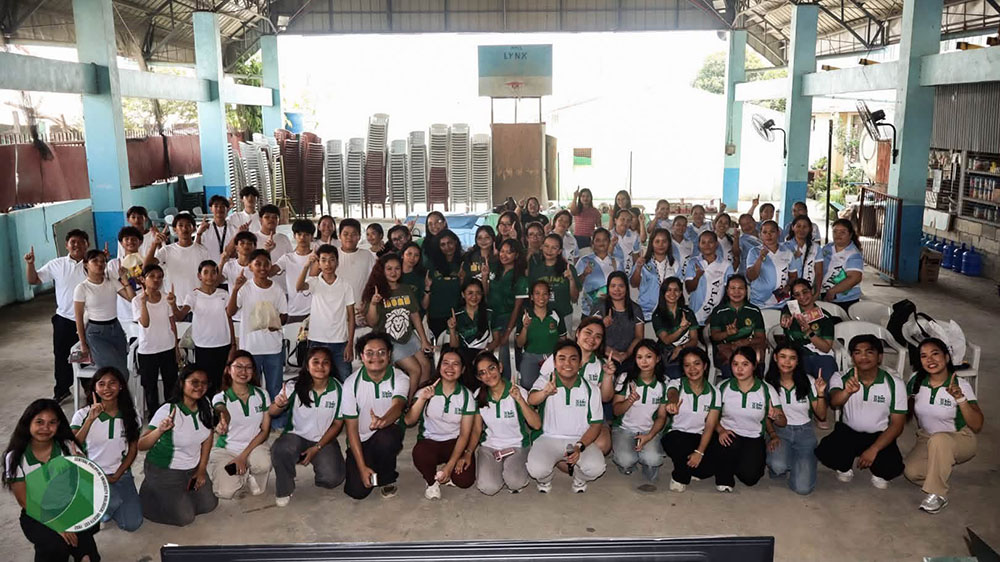
Faculty members from the CPU Life Sciences Department and officers from the CPU Biological Society pose with parents and students of Iloilo River Plains Integrated School (IRPIS) during BiolohisTALKS: Safe Food Handling and Proper Handwashing for Healthy Homes in Barangay Lanit, Jaro, Iloilo City, last September 19.
Bringing scientific knowledge beyond the classroom and into the community, the Department of Life Sciences and the CPU Biological Society conducted BiolohisTALKS: Safe Food Handling and Proper Handwashing for Healthy Homes last September 19 at Iloilo River Plains Integrated School (IRPIS) in Barangay Lanit, Jaro, Iloilo City.
The one-day community extension initiative brought together parents, guardians, and students for an interactive learning experience on food safety, proper hygiene, and healthier household practices. Its two highlights were an educational talk on food safety and a series of hands-on demonstration stations.
The first highlight was a talk delivered by Amafe B. Gavile-Torrecampo, MSc, faculty member of the Department of Life Sciences, who emphasized the importance of proper food handling in preventing foodborne illness. She introduced participants to the common sources of food contamination, the risks of unsafe food preparation, and practical ways to prevent cross-contamination in household kitchens. By relating scientific principles to everyday household activities, her talk showed how simple but consistent preventive measures can help protect families from foodborne diseases and other hygiene-related health risks.
Building on the talk, Biology students facilitated the demonstration stations, which were designed to translate food safety concepts into practical household skills. The stations featured the proper handling and preparation of meat and vegetables, the prevention of cross-contamination, and correct handwashing techniques. Rather than simply observing, parents and students took part in return demonstrations, practicing each technique firsthand and reinforcing their understanding of the lessons. This participatory approach made scientific information more accessible and applicable to daily life. For the student facilitators, the stations offered an opportunity to apply their classroom and laboratory knowledge in a community setting, reinforcing the role of the biological sciences in addressing everyday public health concerns. Games and a raffle further encouraged participation, creating an enjoyable learning environment and strengthening the connection between the University and the school community.
Beyond practical knowledge, BiolohisTALKS reflected CPU’s commitment to community-centered education and sustainable development. The initiative contributed to the United Nations Sustainable Development Goal (SDG) 3: Good Health and Well-Being by promoting preventive health practices that help reduce the risk of foodborne and hygiene-related illnesses. It supported SDG 4: Quality Education by making science-based knowledge accessible through participatory learning. The collaboration among the Department of Life Sciences, the CPU Biological Society, and IRPIS likewise demonstrated SDG 17: Partnerships for the Goals.
Through BiolohisTALKS, the Department of Life Sciences and the CPU Biological Society sought to empower families with the knowledge and practical skills needed to maintain safer food preparation practices and healthier home environments, showing that the impact of the biological sciences extends far beyond laboratories and classrooms.
Through initiatives such as this, CPU continues to bridge science and service, bringing practical knowledge closer to the families and communities it seeks to serve.