
By Dr. Joyce S. Wendam
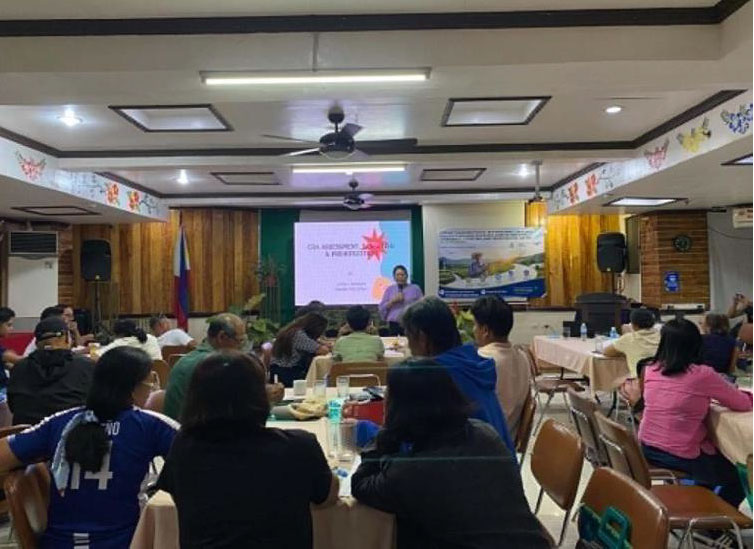
LAYING THE GROUNDWORK. Dr. Joyce S. Wendam discusses Climate-Resilient Agriculture (CRA) assessment tools and regional priorities before personnel from DA-NIR, AMIA farmer-beneficiaries, partners, and LGUs.
Bringing academic precision to regional climate action, Dr. Joyce S. Wendam, a professor at the College of Agriculture, Resources and Environmental Sciences (CARES) of Central Philippine University (CPU), served as the key resource person for the Department of Agriculture – Negros Island Region (DA-NIR) capability-building workshop. The activity aimed to strengthen the capacity of DA-NIR personnel, Local Government Units (LGUs), and partner agencies in applying standardized AMIA tools for CRA interventions across the three provinces of the region: Negros Occidental, Negros Oriental, and Siquijor.
Shifting from Passive Science to Proactive Engineering
Delivered to farmer-beneficiaries of the Adaptation and Mitigation Initiative in Agriculture (AMIA) Villages, local government planners, and regional partners, Dr. Wendam’s lecture shed critical light on how agricultural science is shifting from passive observation to proactive engineering.
Focusing on Climate-Resilient Agriculture (CRA) Assessment, Targeting, and Prioritization, the comprehensive knowledge-sharing session outlined the exact metrics and structured frameworks necessary to establish standardized interventions, safeguard local food security, and build systemic ecological and social resilience across the region.
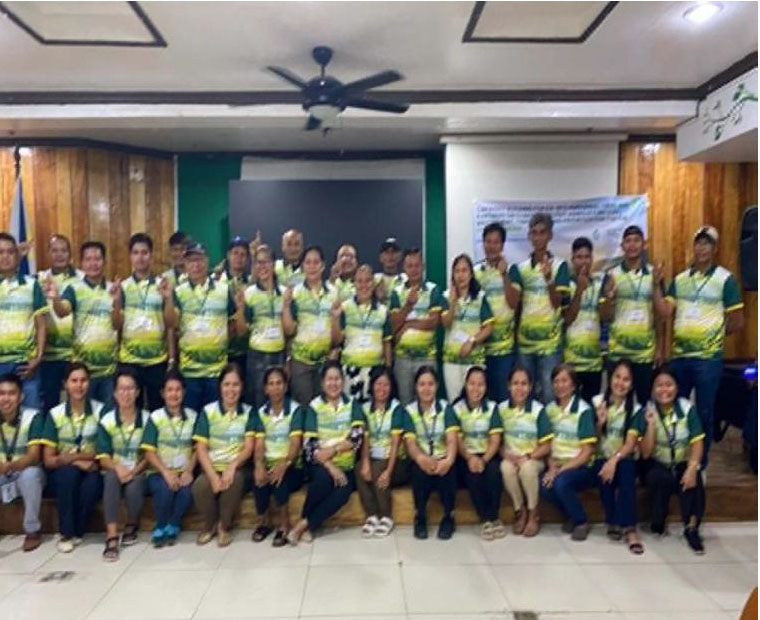
UNITED FOR RESILIENCY: Participants from various AMIA Villages under the DA-NIR and the resource person gather for a milestone photo during the Capability-Building on Climate-Resilient Agriculture Assessment, Targeting, and Prioritization. Held from August 26–28 in Dumaguete City, the event highlighted the powerful impact of collaborative regional planning to establish sustainable, weather-resilient farming communities.
Standardizing Climate Frameworks Across the Three Provinces
The lecture began by addressing a fundamental reality: resources are finite, but climate threats are widespread. To allocate capital, technology, and extension services effectively, regional planners rely on a Climate Risk Vulnerability Assessment (CRVA) framework developed by the Alliance of Biodiversity International and International Center for Tropical Agriculture [CIAT], (2020).
The lecture also handled the complex task of prioritization. When dozens of climate-smart technologies exist, which ones should an island ecosystem or an individual municipality invest in?
The selection matrix is driven by rigorous Cost-Benefit Analysis (CBA) and stakeholder feedback. Interventions are prioritized based on their immediate field viability, economic returns for smallholders, and dual adaptation-mitigation benefits:
- Climate-Smart Varieties: Prioritizing the adoption of stress-tolerant, flood-prone, or droughtresistant crop variants (such as organic red rice lines) drastically reduces operational costs and stabilizes yields during extreme weather (Department of Agriculture – Negros Island Region [DA-NIR], 2017).
- Water Conservation & Infrastructure: Integrating small-scale rainwater harvesting systems and drip irrigation ensures crop survival during dry spells, directly tackling the volatile precipitation shifts brought on by climate change.
- Agroecological Practices: Prioritizing diversified systems, conservation agriculture, crop rotation, and agroforestry serve a dual purpose. These practices improve soil health and moisture retention (adaptation) while acting as carbon sinks to sequester greenhouse gases (mitigation).
By aligning the operational capabilities of local authorities with standardized AMIA toolkits, the workshop establishes a data-driven baseline for the newly integrated Negros Island Region. Local coordinators are now uniquely equipped with Decision Support Tools (DST) to identify vulnerable agricultural zones, target resource distribution effectively, and prioritize long-term climate-smart adaptations.
Safeguarding Regional Food Security and Community Resilience
Ultimately, this localized approach bridges the gap between academic expertise and field-level implementation. The joint collaboration between CPU-CARES, the DA-NIR regional office, and municipal LGUs underscores a unified commitment to future-proofing regional farming communities against volatile climate shifts, ensuring sustainable livelihoods across Negros and Siquijor.
The lecture concluded with an active dialogue with the farmer-beneficiaries, emphasizing that technical prioritization briefs are only as good as the community-level mechanisms backing them. To truly scale up these efforts across the Visayan island clusters, these scientific assessments must translate into localized weather advisories, accessible micro-credit facilities, and crop insurance programs that protect farming families from catastrophic loss.