
By Mikee Natinga Norico
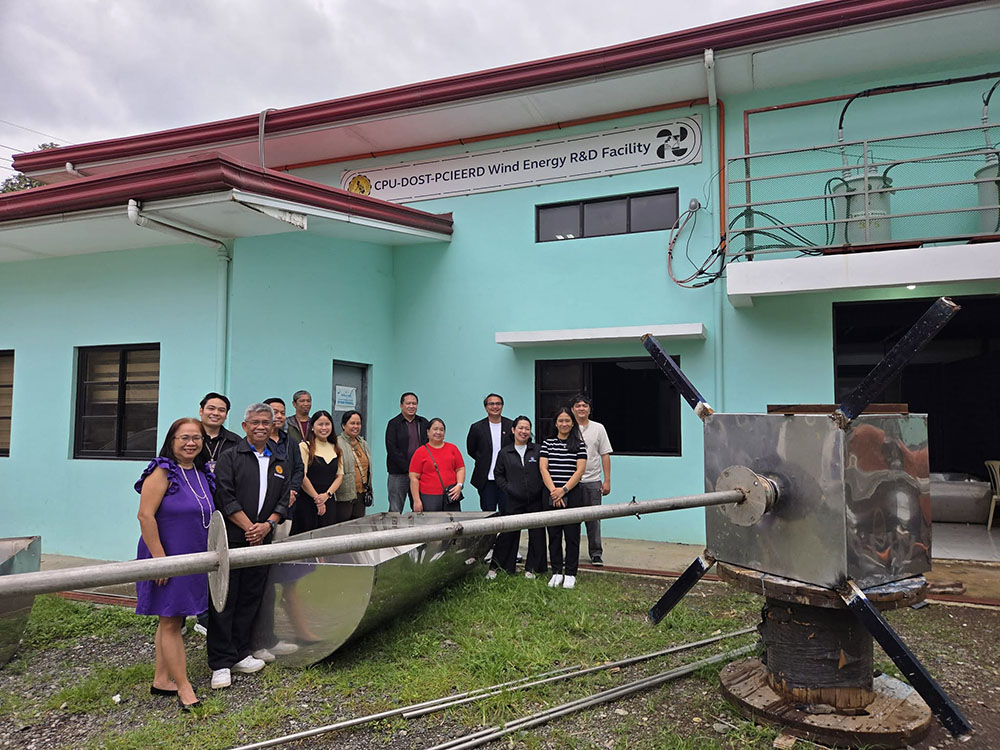
Officials and stakeholders from CPU and DOST-PCIEERD pose for a group photo following the facility tour at the CPU-DOST-PCIEERD Wind Energy R&D Facility.
On August 25, 2026, Central Philippine University (CPU) and the Department of Science and Technology–Philippine Council for Industry, Energy and Emerging Technology Research and Development (DOST-PCIEERD) conducted a post-monitoring activity on the completed Institution Development Project (IDP), with Project Monitoring Information System (PMIS) No. 4388, titled “Establishment of a Wind Turbine Development and Testing Laboratory” at the CPUGAD TBI Co-Working Space and the CPU DOST-PCIEERD Wind Energy Research & Development Facility.
The activity brought together DOST-PCIEERD executives and personnel, CPU representatives, and partner stakeholders to review the project’s implementation and outputs, with particular focus on its impact, developments, technological assessment and adoption, and sustainability, while discussing opportunities to further strengthen the university’s research and development capabilities in wind energy technology. The discussions also covered the project’s significant benefits, enhancements and follow-on activities, validation and adoption of developed technologies, and future directions for technology transfer, commercialization, replication, and broader application.
University President Rev. Dr. Ernest Howard B. Dagohoy welcomed the DOST-PCIEERD delegation and partner stakeholders during the afternoon session. He expressed the university’s appreciation for the continued partnership in advancing research, innovation, and technology development. He also emphasized the importance of strengthening collaboration with government agencies and other stakeholders to support initiatives that contribute to sustainable development and enhance CPU’s research and development capabilities.
Engr. Kleio Alfric S. Tobias, Officer-in-Charge of the CPU Mechanical Engineering Department and Laboratory Coordinator of the CPU DOST-PCIEERD Wind Energy Research & Development Facility, led discussions on the development, updates, and future directions of the facility. The discussions focused on strengthening the university’s capabilities in wind turbine research, technology development, testing, and validation.
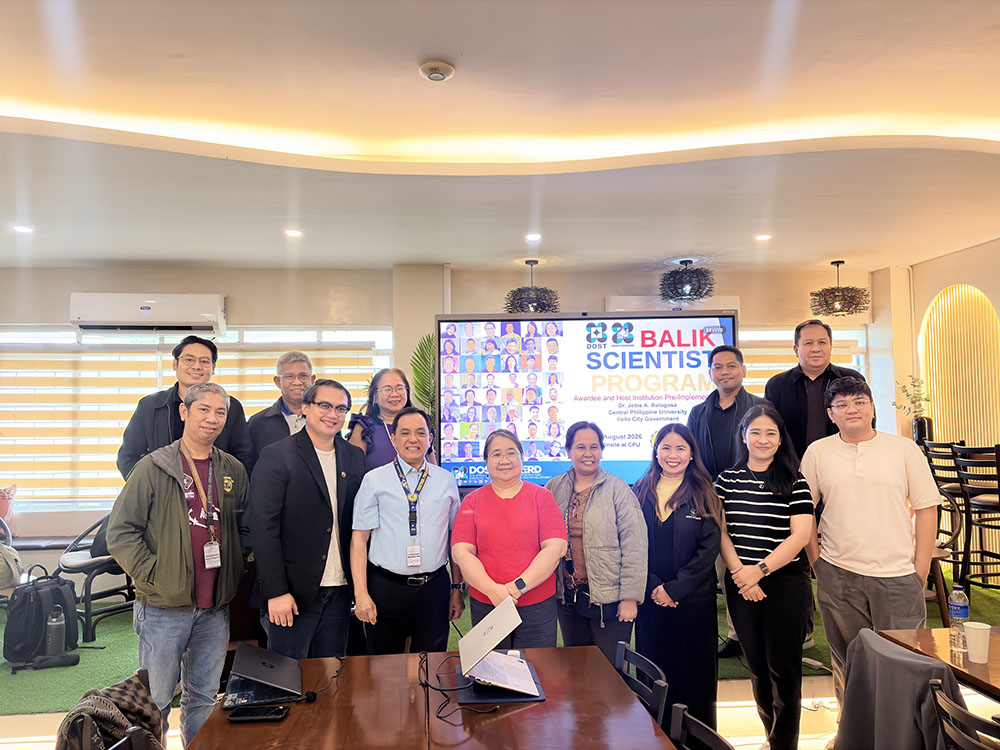
CPU and DOST-PCIEERD officials and project stakeholders gather for a group photo following the meeting and activities at the CPUGAD TBI Co-Working Space.
The activity also featured the promotion and pre-engagement of the Balik Scientist Program and DOST-PCIEERD Funding Programs, providing participants with information on available research and development support and potential opportunities for collaboration.
CPU personnel also led the DOST-PCIEERD officials and partner stakeholders on a tour of the CPU DOST-PCIEERD Wind Energy Research & Development Facility, providing them with an opportunity to view the laboratory, testing infrastructure, and equipment firsthand.
Among the DOST-PCIEERD officials and personnel in attendance were Engr. Niñaliza H. Escorial, Deputy Executive Director and Officer-in-Charge of the Office of the Executive Director; Dr. Ruby Raterta, Chief of the Human Resources and Institution Development Division (HRIDD); Ms. Glenda Dorcas T. Sacbibit, Supervising Science Research Specialist, HRIDD; Ms. Roxanne E. delos Reyes, Senior Science Research Specialist, HRIDD; Ms. Ma. Lerelie M. Villaflor, DOST-PCIEERD Balik Scientist Program Personnel; and Ms. Elaine P. Haftorn, Science Research Specialist I, HRIDD.
With the completion of the project, CPU is now moving toward the next phase of developing the facility as a long-term platform for wind energy research, technology development, and testing. Through continued collaboration with DOST-PCIEERD, government agencies, academic institutions, and industry partners, the university seeks to expand the facility’s use, strengthen local technology development, and bring research outputs closer to actual deployment, technology transfer, and commercialization.