
By OVPRDE
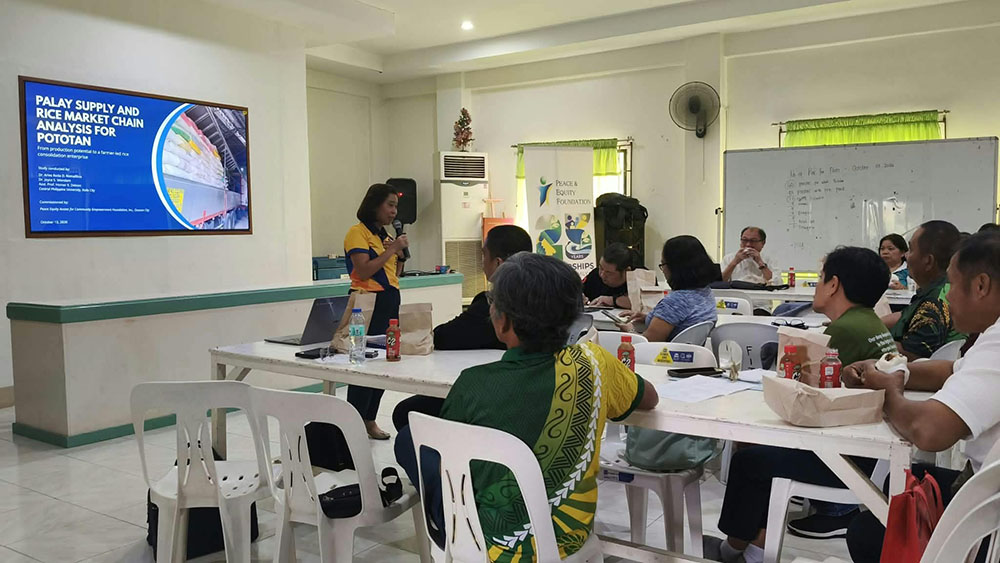
CPU Vice President for Research, Development, and Extension Dr. Aries Roda D. Romallosa presented the findings of the “Palay Supply and Rice Market Chain Analysis for Pototan,” highlighting opportunities to strengthen the local rice industry through evidence-based research.
Central Philippine University (CPU), through its Office of the Vice President for Research, Development, and Extension (OVPRDE), presented the findings of its research study titled “Palay Supply and Rice Market Chain Analysis for Pototan” during the Pototan Rice Multi-Stakeholders Consultation held on October 13, 2026, in Pototan, Iloilo.
The study, commissioned by the Peace Equity Access for Community Empowerment Foundation, Inc. (PEF), aims to provide evidence-based insights into the municipality’s rice industry, particularly in the areas of palay production, supply, market dynamics, and value chain development.
The research findings were presented by Dr. Aries Roda D. Romallosa, CPU Vice President for Research, Development, and Extension and Project Leader, together with research team members Dr. Joyce S. Wendam and Asst. Prof. Homer E. Deloso, faculty members of the CPU College of Agriculture, Resources, and Environmental Sciences (CARES).
The study examined the existing palay supply and rice market chain in Pototan to identify opportunities for strengthening market linkages, improving the competitiveness of local rice enterprises, and enhancing the overall efficiency and sustainability of the rice value chain.
The multi-stakeholder consultation served as a platform for presenting and validating the research findings, gathering insights from key stakeholders, and identifying priority interventions to address challenges and opportunities within the local rice industry.
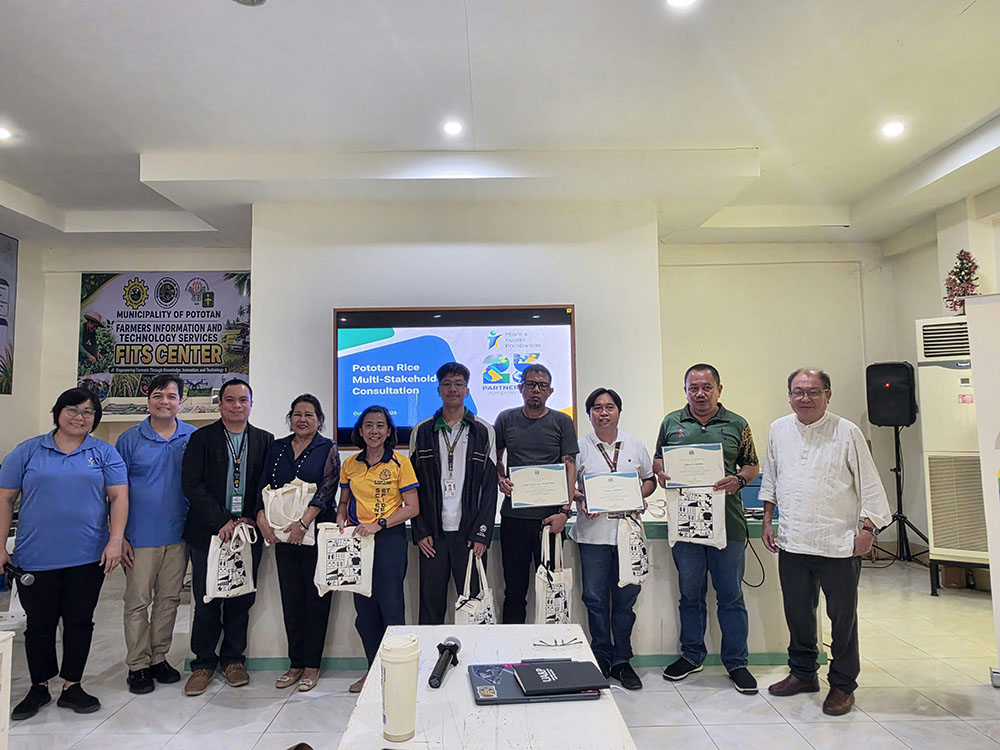
Attendees gather for a photo opportunity following the presentation and consultation on Pototan’s rice supply and market chain, fostering collaboration toward a more competitive and sustainable local rice industry.
Through the consultation, the research team and participating stakeholders explored potential collaborative strategies to strengthen the connections among farmers, rice processors, traders, and other market actors, with the broader goal of promoting a more inclusive, competitive, and sustainable local rice economy.
The collaboration also marks a continuation of CPU’s longstanding partnership with PEF in advancing research-based innovations and community development initiatives. PEF was the same organization that provided funding support for the commercialization of CPU’s STRikeGas Stoves following the innovation’s success in the Panibagong Paraan competition of the World Bank in 2009. The earlier initiative demonstrated the potential of university-developed technologies to move beyond research and into practical applications that benefit communities.
More than a decade later, the partnership continues through initiatives such as the Pototan rice market chain study, reflecting a shared commitment to translating research into practical solutions that address local development needs.
The initiative highlights the importance of research-driven planning and multi-stakeholder collaboration in addressing agricultural development challenges. By generating locally relevant data and engaging stakeholders in the research process, the study seeks to support informed decision-making and the development of practical interventions for Pototan’s rice sector.
The undertaking also reinforces CPU’s commitment to translating research into meaningful community impact. Through partnerships with development organizations such as PEF, the University continues to advance its research, development, and extension initiatives by connecting scientific knowledge with the needs of farmers, local enterprises, and communities.
The Pototan rice market chain study demonstrates CPU’s continuing efforts to contribute to sustainable agricultural development, rural enterprise competitiveness, and inclusive economic growth through evidence-based research and collaborative engagement.