By Asst. Prof. Sarex Dalida Dipol, Jr.
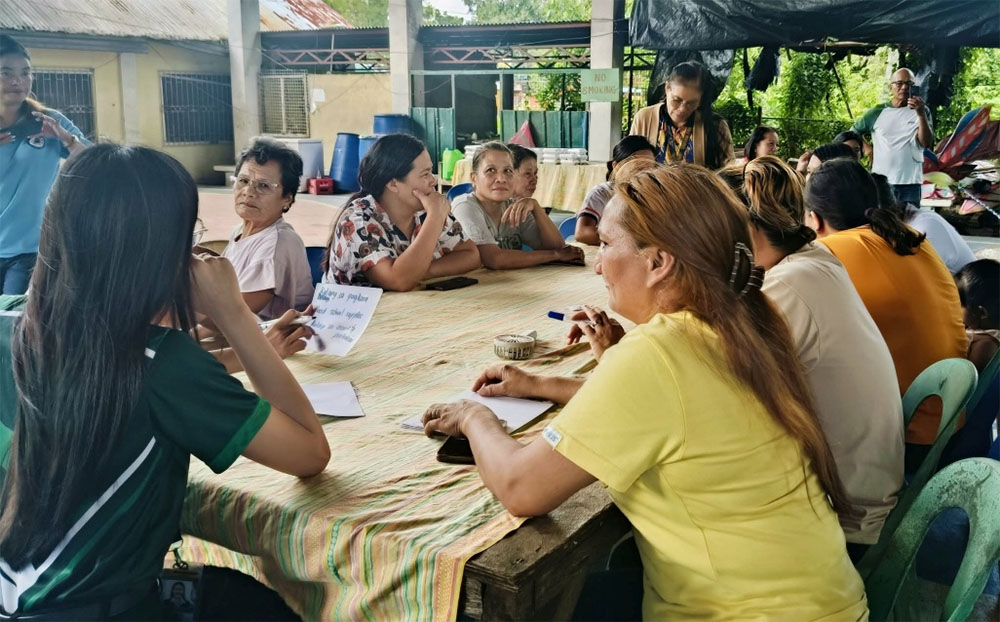
Ms. Kyla Kris A. De La Cruz (wearing green), a faculty member of the Department of Life Sciences, and Asst. Prof. Arlene A. Laquian (standing, wearing brown), Outreach Coordinator of the College of Medical Laboratory Science, assisted community members during the Community Needs Assessment conducted at Station 2 of the CPU Center for Mangroves and Marine Biodiversity Conservation in Brgy. Dangula-an, Anilao, Iloilo.
On August 27–28, 2026, the Community Engagement and Service-Learning Center (CESLC), in partnership with the College of Arts and Sciences (CAS) through its Department of Life Sciences and the College of Medical Laboratory Science (CMLS), conducted a Community Needs Assessment in the three stations of the CPU Center for Mangroves and Marine Biodiversity Conservation (CMMaBiC).
A community needs assessment is an important process used to identify the challenges, concerns, and priorities of partner communities. It also provides community members with an opportunity to share their perspectives and recommend appropriate solutions and interventions based on their needs. The findings from the assessment will serve as a basis for the University’s future environmental conservation, community development, and social extension programs and services in its adopted communities.
The assessment team included Dr. Stella G. Fernandez, Dean of CAS; Dr. Laureen M. Manalo, OIC of the Department of Life Sciences; Dr. Regina E. Samillano, Program Coordinator for Science Education; Asst. Prof. Cherrylyn M. Macairan, OIC of CMMaBiC; Dr. Maricel Falguisana-Fontonalgo and Ms. Kyla Kris A. De La Cruz, faculty members of the Department of Life Sciences; and Asst. Prof. Arlene A. Laquian, Outreach Coordinator of CMLS.
CMMaBiC has three stations located in different coastal communities in Iloilo. Station 1 is located in Sitio Panus-on, Brgy. Nabitasan, Leganes, Iloilo. While the station is situated within Brgy. Nabitasan, only Sitio Pandan and Sitio Bongsu-an are adopted communities of the University, not the entire barangay. Station 2 is located in Brgy. Dangula-an, Anilao, Iloilo, while Station 3 is situated in Brgy. Culasi, Ajuy, Iloilo, which is already an adopted community of the University.
These mangrove communities serve as important venues for the University’s instruction, research, and extension initiatives. They provide faculty, students, and staff with opportunities to participate in environmental conservation, community development, and experiential learning activities while working closely with local communities.