By Patricia Pedroso, BA-Communication 4, The Centralian Link Intern
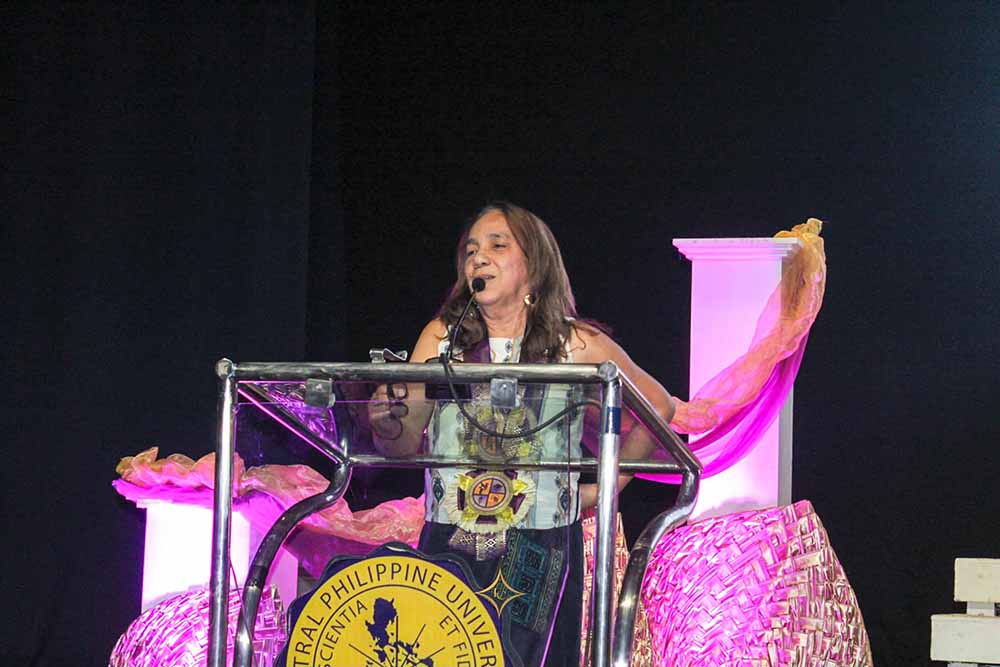
Ms. Heidi L. Mendoza, former Commissioner of the Commission on Audit (COA), captivates the audience in the Rose Memorial Auditorium during her long-awaited symposium on “Accounting for Democracy.”
“If the world is a balance sheet, how do you wish to be remembered?” Ms. Heidi L. Mendoza asked her enraptured audience in the hall of Rose Memorial Auditorium. Organized by the College of Business & Accountancy Student Council, Honorable Mendoza imparted her experience and advice to the aspiring accountants, students, and faculty of Central Philippine University in a symposium aptly named “Accounting for Democracy” held last April 18, 2026.
The program proper was opened by an opening prayer from Dr. Hermely A. Jalando-on, and opening remarks from Vice President for Finance, Dr. Florence P. Bogacia, who remarked that the event was a monumental privilege to hear from someone well-respected and renowned in the world of accountancy.
In a world that often views accounting as a dry and technical exercise in spreadsheets, Mendoza reframed the profession as a sacred trust. For her, accounting is not the mere tallying of figures— it is the “art of relationship.” She described the science of numbers as a cycle of deposits and withdrawals.
Her personal journey lent weight to her words. She candidly shared that she never wanted to be an accountant; she dreamed of being a doctor. However, financial constraints led her to BS Accountancy, where she struggled with grades as low as 77. Nevertheless, she persisted and proved that a career is not defined by a starting point. She began as a humble auditing aide at the COA and climbed to the very top.
Mendoza distilled years of high-stakes auditing into key principles for the next generation of CPAs. Life, like a ledger, requires equilibrium. She joked that one cannot be “too holy,” nor should one be “too unruly,” but rather find the middle ground where truth resides. Furthermore, she urged students to look past the cost and see the value created. By differentiating an asset and an expense, she held the students accountable by asking them to position themselves as an asset for the benefit of their family and for the nation’s future.
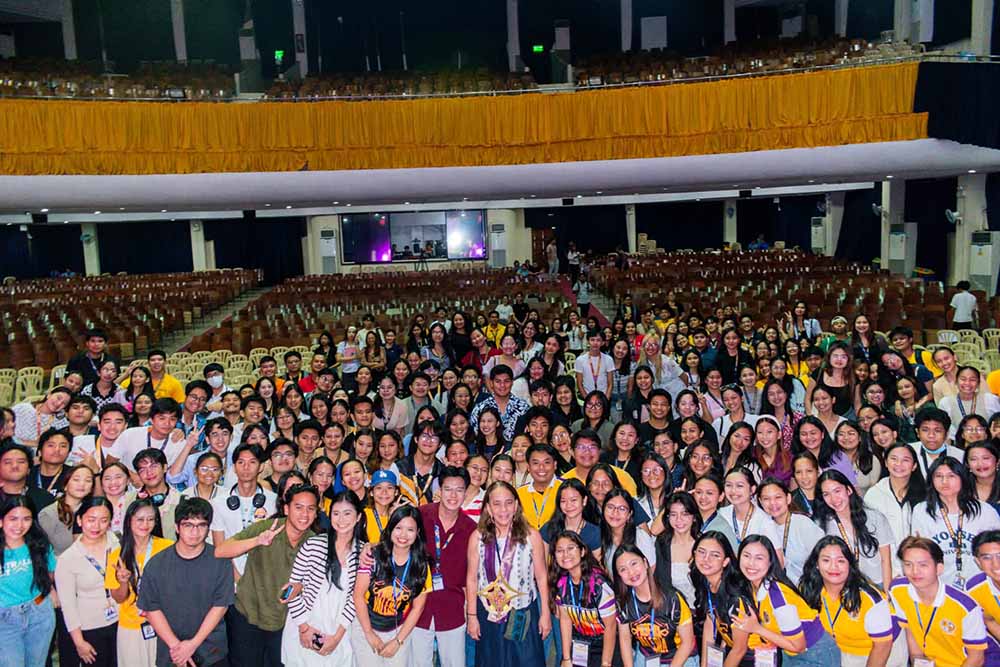
Attendees, faculty, and council members gather around for the formal picture-taking after an insightful lecture and discussion on accountancy.
“Budget is not about limitation,” Mendoza insisted. “It is about intentional spending.” She also warned that a hunger for quick wealth is the fastest route to professional ruin. “Bago sana natin pangaraping maging successful na accountant, hanapin muna natin kung nasaan ang puso natin, for all we know, matagal na pala tayong iniwan ng puso nating tapat at makatotohanan. (Before we dream of being successful, we must find where our heart is. For all we know, our honest and truthful heart may have left us long ago.)”
Perhaps her most striking point was that accounting is the core of democracy. It is the tool that controls the behavior of public officials. Despite how the sentiment seemed cliche and repetitive, Mendoza reiterated that now, more than ever, is the time for citizens to look into how public funds are spent.
Following this, an open forum was held where the eager participants may relay their questions to the esteemed speaker. After the awarding of certificate and token and ceremonial picture-taking, CBA Governor Beatrice Lozada concluded the ceremony with a powerful reminder, that accounting for democracy is defined by the tangible and intangible value delivered to a community.
As the symposium ended, the resounding message was clear: an accountant’s job is not to merely record data, but to act as a bridge between institutional processes and human trust. In the hands of a person with integrity, an accounting ledger is not just a book— it is a shield for the nation’s very welfare.