
By The Centralian Link
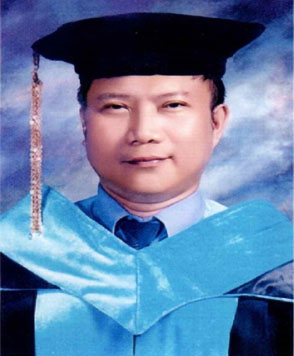
Prof. Dr. Ananias C. Sabijon, Jr. speaks on the ethical and responsible use of artificial intelligence in research during the webinar “From Campus to Career: Professional Readiness and Responsible Use of AI in Research” on May 2, 2026.
Prof. Dr. Ananias C. Sabijon, Jr., a University Full Professor and Director of the Center for Teaching and Learning Excellence (CTLE) at Central Philippine University (CPU), addressed over 50 DOST scholars and undergraduate students across Western Visayas (Region VI), Negros Occidental, and the National Capital Region (NCR) on May 2, 2026, delivering a pointed message on the ethical use of artificial intelligence (AI) in academic research.
Prof. Dr. Sabijon is a recipient of the Dr. Juan Salcedo, Jr. Science Education Award and the United Board for Christian Higher Education in Asia (UBCHEA) Fellows Program. He has received training in teaching and educational administration from Hong Kong Baptist University (HKBU), Hong Kong (SAR), and Valparaiso University (VU) in Indiana, USA. Currently, he is an Associate Member of the Department of Science and Technology National Research Council of the Philippines (DOST-NRCP) and a registered author, writer, editor, and subject matter expert with the National Book Development Board (NBDB) of the Philippines.
Speaking at the webinar “From Campus to Career: Professional Readiness and Responsible Use of AI in Research,” organized by the Department of Science and Technology Scholars’ Association in Region VI (DOST-SAIS), Dr. Sabijon emphasized that AI tools such as ChatGPT, DeepSeek, Gemini, and Claude should serve as assistants, not replacements for human intellect and ethical judgment. The virtual event, held via Zoom from 9:00 a.m. to 12:00 noon, drew participants from various higher education institutions in Negros Occidental and other provinces in Region VI, with a special focus on STEM and laboratory-based disciplines where data integrity and technical precision are paramount.
Aligning with the publication of Agrawal et al. (2015), Dr. Sabijon urged students to leverage generative AI as “bicycles for the mind” (a metaphor quoted from Steve Jobs) to speed up discovery, provide clarity, and help understand complex ideas. He introduced the concept of prompt engineering, demonstrating how well-constructed prompts guide AI to produce accurate and relevant information while reducing the risk of error. However, he also warned against the uncritical acceptance of AI-generated content. “While AI tools are effective helpers in doing research, they are not substitutes for factual knowledge bases . . . and researchers, teachers, students, and other stakeholders must adopt both critical skepticism and a verification-first mindset,” he said.
Significant parts of the session addressed the growing problems of AI hallucinations and fabricated references. Dr. Sabijon operationally defined hallucinations as outputs that, despite appearing coherent and plausible, are factually incorrect or lack logical consistency. He cited a disturbing case in which a manuscript passed rounds of peer review despite nearly 80% of its cited references being nonexistent—a phenomenon he called “the citation crisis.” To counter these risks, he presented to the participants the “Researcher’s Defense Toolkit,” which includes mitigation prompts, verification tests (checking Digital Object Identifiers [DOIs]), the “can’t find rule,” and consensus searches across multiple sources. He also discussed institutional responses such as AI policy development and publication, AI screening tools, and the responsibility of students to verify every citation.
Moreover, Prof. Dr. Sabijon presented standardized disclosure protocols for AI-assisted scholarly work, providing participants with AI-Assisted Research Disclosure Templates aligned with UNESCO’s 2026 guidance on generative AI in education and research. He also introduced, citing the publication of Chan (2026) and other authors, the human-in-the-loop (HITL) model, where humans remain active contributors—not passive recipients—in the decision-making loop, and detailed the TACO Framework (Think, Ask, Check, Own) for human–AI cognitive partnership. “With AI, the learning process and goal should be augmented, not artificially replaced,” Dr. Sabijon stressed. “The HITL is not a technical compliance requirement; it is the intellectual safeguard.”
According to Miss Jessa Mae Donasco, a third-year Chemistry student at Technological University of the Philippines–Visayas and the Deputy Director for External Affairs of DOST-SAIS, who extended the formal invitation to Dr. Sabijon to serve as the resource speaker, “Dr. Sabijon’s research-based presentation and insights on the productive uses of AI, its technical risks, academic integrity, and the importance of maintaining a human-in-the-loop approach were greatly appreciated and truly valuable to the DOST scholars.”
Prof. Dr. Sabijon concluded by challenging the scholar-participants to let their work be defined by character and competence, not shortcuts. Using the ancient parable of the blind men and the elephant—in which each man, touching a different part, describes the same creature as a spear, snake, tree, or rope—he drew a parallel to artificial intelligence: “AI today is much like that elephant.” He then underscored the necessity of a critical and multidisciplinary approach to fully comprehend AI.
On a personal note, Prof. Dr. Sabijon expressed gratitude to CPU President Rev. Dr. Ernest Howard B. Dagohoy for granting him permission to officially serve as resource person and to DOST Region VI officials and personnel—particularly Regional Director Engr. Rowen R. Gelonga, Miss Jessa Mae Donasco, Ms. Lesley Feil H. Ferrer, and Mr. Leo A. Lozada—for the opportunity to share his research findings, insights, and experiences as a researcher, professor, and administrator regarding AI.