By Mikee Natinga Norico
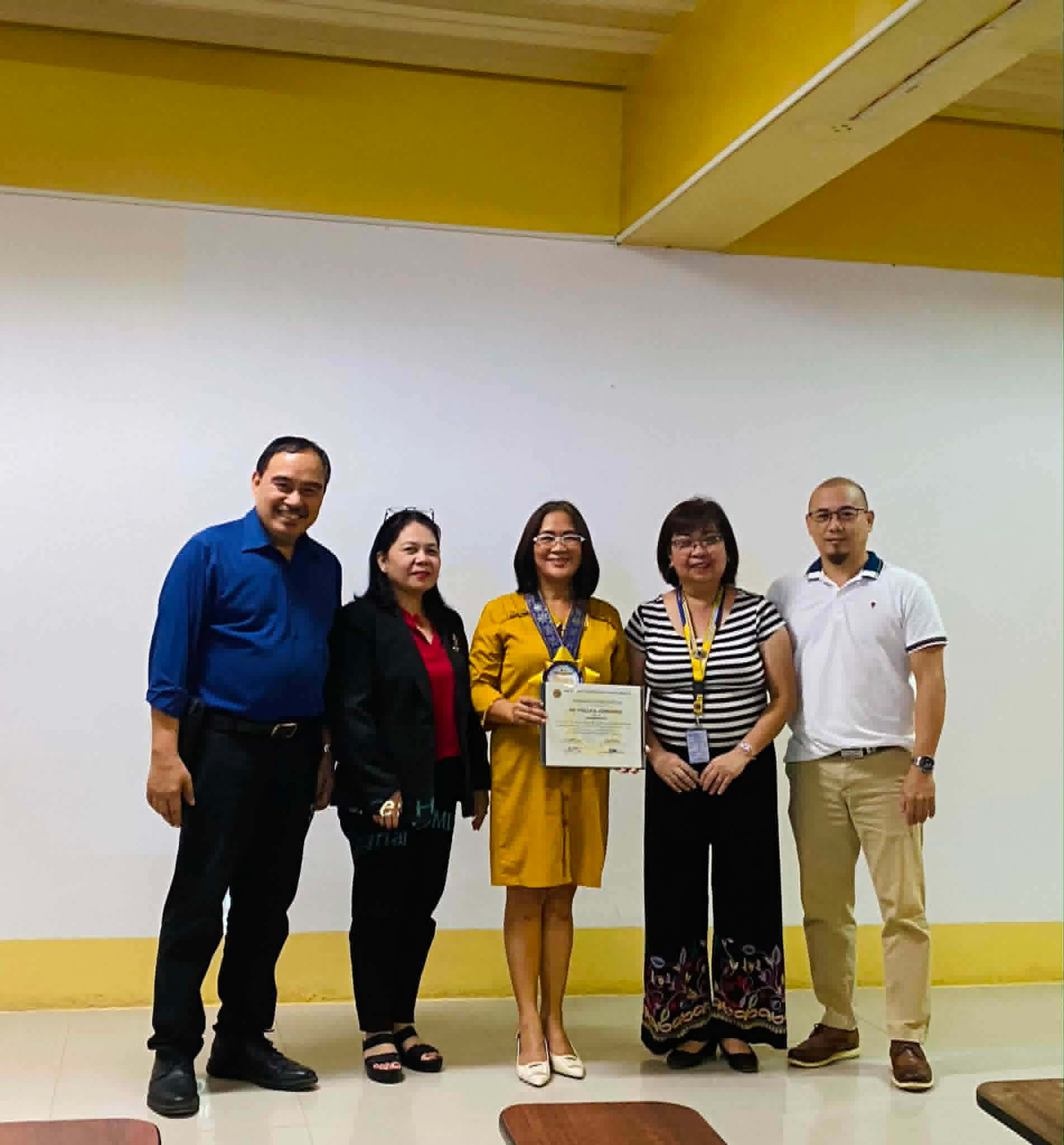
As keynote speaker, Dr. Stella G. Fernandez (center), Dean of the College of Arts and Sciences, receives her certificate of recognition during the Faculty Research Colloquium and Sharing of Best Practices held at the Audio Visual Room of JBLFMU-Molo, Inc. on May 8, 2026.
On May 8, 2026, faculty members from the College of Maritime Education and the College of Business and Management of John B. Lacson Foundation Maritime University-Molo, Inc. gathered for the Faculty Research Colloquium and Sharing of Best Practices at the Audio Visual Room of JBLFMU-Molo, Inc., highlighting the importance of research, innovation, collaboration, and community engagement in higher education.
Organized by JBLFMU Research Director Dr. Rolando A. Alimen, the colloquium served as a platform for faculty researchers to exchange ideas, present scholarly works, and promote best practices in research and instruction.
Serving as keynote speaker was Stella G. Fernandez, Dean of the College of Arts and Sciences of Central Philippine University, Chairperson of the Sustainable Campus Committee, Chairperson for Academic Integrity and AI Policy, and National Secretary of the UNITED Federation of Filipino-American Educators (UNIFFIED-Phils.). Dr. Fernandez also serves as a member of the Regional Wildlife Management Committee of DENR Region VI, advocating for environmental sustainability, biodiversity conservation, and responsible stewardship of natural resources.
In her keynote address, Dr. Fernandez emphasized that research should go beyond academic compliance and become a transformative instrument for addressing societal concerns and contributing to national and global development. She encouraged faculty researchers to undertake innovative, interdisciplinary, and socially responsive studies, particularly in the fields of environmental sustainability, education, health, maritime innovation, and community development.
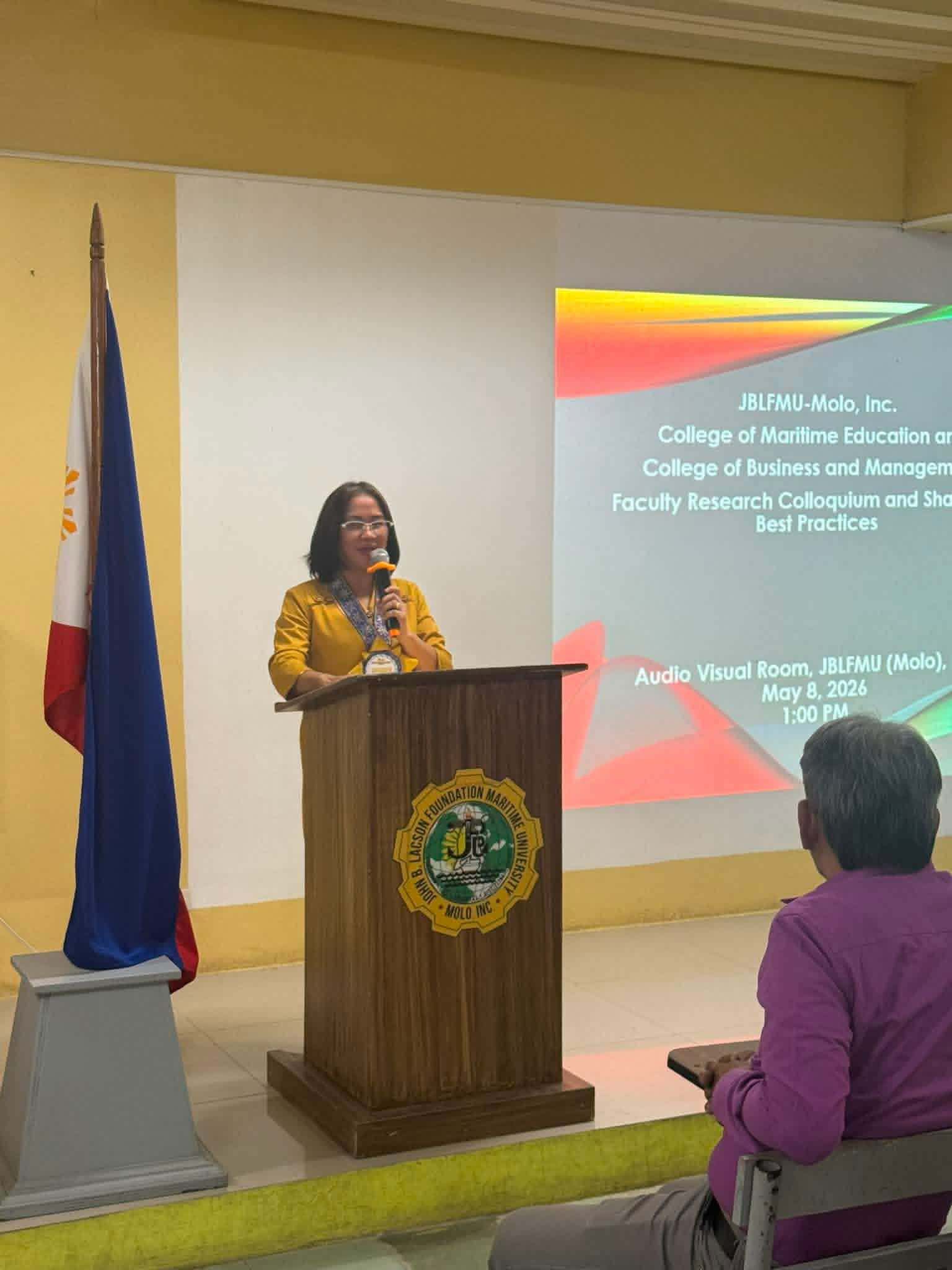
Dr. Stella G. Fernandez delivers her keynote address, emphasizing the role of research as a transformative tool in addressing societal concerns and promoting sustainable development.
One of the highlights of her presentation was the discussion of the Waterwise Project, a United Board for Christian Higher Education in Asia (UBCHEA)-supported initiative that promotes rainwater harvesting, water conservation, and sustainable environmental practices. She also shared the collaborative efforts between CPU and JBLFMU through water analysis initiatives in Igang, Guimaras, underscoring how institutional partnerships can address environmental challenges while strengthening academic linkages.
Dr. Fernandez further stressed the importance of integrating Peace Education, Indigenous Peoples Education (IPEd), Gender and Development (GAD), inclusivity among learners, and ethical Artificial Intelligence (AI) use in both research and instruction. According to her, higher education institutions play a crucial role in developing not only competent professionals but also compassionate, ethical, and globally responsible citizens.
She likewise discussed the growing significance of research productivity and innovation in international recognition systems such as QS Rankings, WURI (World University Rankings for Innovation), and EduRank. Dr. Fernandez noted that impactful research outputs, sustainability initiatives, community engagement programs, and international collaborations contribute significantly to institutional visibility and academic excellence.
The keynote address also highlighted environmental and community-based initiatives, including the Batiano River conservation efforts, biodiversity protection programs, and sustainable campus projects that may be integrated into service-learning and extension programs.
The colloquium also featured faculty paper presentations on topics including library utilization, maritime education, international educational tours, feeding programs, and clinic management systems. Faculty researchers shared insights and best practices aimed at enhancing instruction, student services, and institutional effectiveness.
The event concluded with an open forum where participants exchanged ideas, explored collaborative research opportunities, and reflected on the importance of research in nation-building and sustainable development. The activity reinforced JBLFMU-Molo’s commitment to fostering a culture of research excellence, innovation, and transformative education.