By The Centralian Link
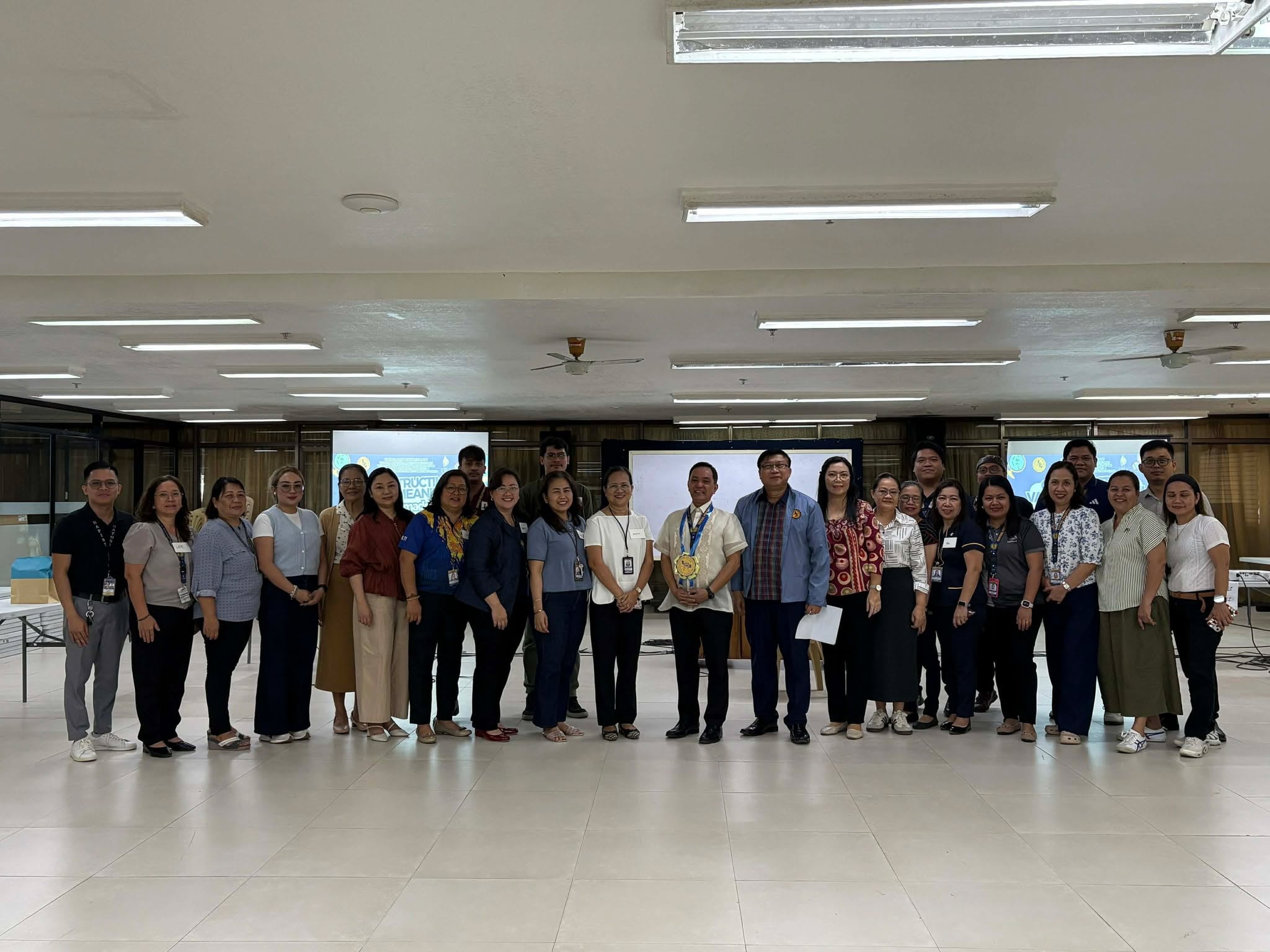
The participants and some resource persons/facilitators with University President Rev. Dr. Ernest Howard B. Dagohoy (center), in a white barong Tagalog, taken following his delivery of the welcome remarks and a message of support during the seminar-workshop.
The Central Philippine University Center for Teaching and Learning Excellence (CPU-CTLE), in collaboration with the Office of the Vice President for Academic Affairs, the Review, Continuing Education, and Consultancy Center (RCECC), and the Human Resource Development Office (HRDO), conducted a research-based seminar-workshop titled “Constructing Valid and Meaningful Teacher-Made Tests” on April 10, 2026, from 8:00 a.m. to 5:00 p.m. at the CPU Henry Luce III Conference Room.
The activity aimed to strengthen the assessment literacy of educators by grounding test construction in research and experience-based principles and practices. The organizers set three core objectives, namely: (1) to explain the key principles in constructing teacher-made tests and meaningful assessments, (2) to apply research-based theories, guidelines, and standards in test development, and (3) to evaluate and improve existing teacher-made tests for quality and effectiveness.
The seminar-workshop featured four expert-led sessions covering different test formats and categories. CPU-CTLE Director Dr. Sabijon set the stage with the rationale and a brief literature review on effective teaching and tests, followed by a session on measurement and evaluation in education. He also facilitated the session on “Mastering Multiple-Choice Test Construction: From Theory to Practice.” As an experienced professor, Dr. Sabijon had been consistently rated “outstanding” and “excellent” by stakeholders. He was a recipient of the Dr. Juan Salcedo, Jr. Science Education Award and the United Board for Christian Higher Education in Asia (UBCHEA) Fellows Program. Moreover, he is a registered author, writer, editor, and subject matter expert with the National Book Development Board (NBDB) of the Philippines and an Associate Member of the Department of Science and Technology National Research Council of the Philippines (DOST-NRCP).
Another speaker, Dr. Eden P. Gomez of the CPU College of Education, facilitated the session on “Constructing Effective Matching-Type Tests.” Dr. Gomez earned her Doctor of Education (Curriculum and Instruction) from Central Philippine University, and currently serves as the Program Head of the Bachelor of Elementary Education (BEEd) and the Bachelor of Secondary Education (BSEd), major in Filipino, programs at CPU.
Prof. Rea Angelica F. Villeza, Chairperson of the Department of Religion and Ethics and a recognized editor and author, facilitated “The Basics of True or False Tests,” while Dr. Lenny Rose P. Mucho, Director of the CPU Review, Continuing Education, and Consultancy Center (CPU-RCECC), faculty member in the School of Graduate Studies and the Department of Business Administration, CPU, and accredited trainer in Grassroots Entrepreneurship focused on the topic “Structural Integrity and Taxonomic Properties of Objective Supply-Type Items”.
The seminar-workshop utilized a combination of lecture-presentation, open forum, and hands-on workshop. The 29 selected participants from 10 CPU academic units had the opportunity to apply the concepts discussed by critiquing and improving sample test items and then presenting their outputs in a culminating afternoon session. This approach ensures that the “how” of test construction is not only discussed but also practiced, allowing teachers to leave with immediately applicable skills and meaningful realizations.
“Effective and meaningful instruction requires alignment of learning outcomes, teaching methodologies, and assessment tools that accurately measure student learning. This seminar-workshop provides a platform for faculty members to review the fundamentals of teaching and learning and refine their test construction practices based on solid research findings,” said Dr. Sabijon, CTLE Director and one of the resource speakers. He also emphasized the critical role and great responsibility assumed by teachers as the “experienced” or “trained” professionals (equipped with the competencies and skills in the art and science of teaching and learning) in the academic journey of students—“the less experienced persons”, who need professional guidance and training from the teachers—the “professionals” in the teaching-learning paradigm.
More importantly, the critical role of prayer, recognition of God’s grace, and blessings in effective teaching was highlighted during the closing prayer led by Prof. Villeza.
The seminar-workshop was free to CPU faculty members who desired to enhance their competencies and skills in teacher-made tests and classroom evaluation. This is one of the ways CPU addresses the professional development and lifelong learning needs of its faculty members.