
By Farah Dhea B. Galvez, BA Comm-4 Centralian Link Intern
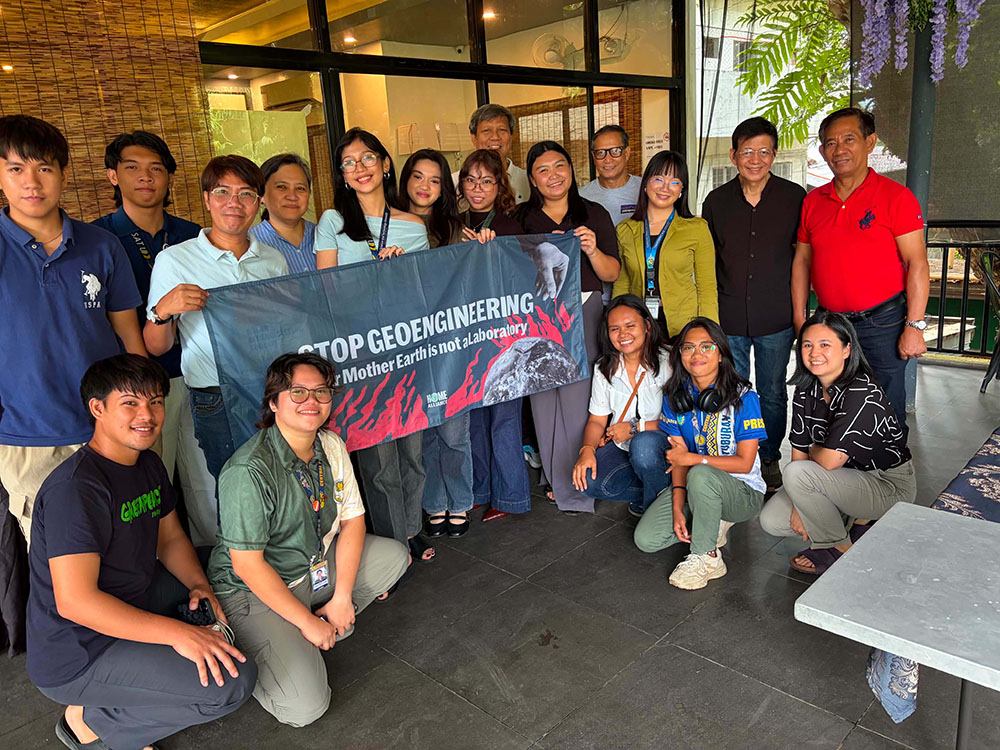
CPU CARES delegates gathered alongside the resource speakers during the Geoengineering and Climate Justice Forum, held on June 26 at Plated Resto, Mandurriao. (Photo courtesy of Fiona Faye B. Luciño).
Student leaders from the Central Philippine University College of Agriculture, Resources, and Environmental Sciences (CPU CARES) joined a forum focusing on Geoengineering and Climate Justice held on June 26 at Plated Resto, Mandurriao, Iloilo City. Spearheaded by the Green Empowered Alliance in partnership with the Hands-Off Mother Earth (HOME) Alliance, the day-long event aimed to educate the public on the ecological hazards of geoengineering, technologies often criticized as temporary cover-ups that fail to address the root causes of the global climate crisis.
Representing various campus organizations, the CPU delegation included Fiona Faye B. Luciño from the CARES Provincial Council, Izza Victoria Lopez of the Philippine Society of Agricultural and Biosystems Engineers – Pre-Professional Group, Maria Jeptha Aaliyah Montenejo representing Ang Tuburan, alongside Rohanne Mionette Del Castillo and Noumie Pajarito of Central Tipig.
Running from nine in the morning until four in the afternoon, the seminar featured insightful lectures by key environmental experts. Nikola Martines of the HOME Alliance and Elenita Daño, an independent researcher specializing in Food, Agriculture, and Technology, led discussions on marine geoengineering and solar radiation modification. Both speakers underscored the environmental, social, and governance risks tied to geoengineering. They cautioned that while these technical interventions are often framed as rapid fixes for global warming, they should never be considered a replacement for tackling the root causes of the climate crisis. Furthermore, the experts stressed that these unproven technologies raise severe climate justice concerns, as their unintended impacts could disproportionately harm vulnerable communities.
Beyond passive listening, the Centralian delegates actively engaged in dynamic group workshops alongside other youth representatives and participants from non-governmental organizations (NGOs). They were tasked with analyzing the potential socio-ecological impacts of geoengineering and brainstorming strategies on how they could contribute to preventing or opposing such experimental activities. Showcasing Centralian excellence, Miss Luciño served as a group presenter, articulating her team’s proposed action plans, critical insights, and recommendations before the plenary.
Throughout the session, the speakers urged the participants to critically challenge proposed climate technologies, demand scientific accountability, and support climate solutions that emphasize environmental sustainability and community well-being. For Miss Luciño, the highlight of the event was the deep dive into the importance of informed environmental leadership and responsible decision-making. Representing her college’s provincial council as a board member, she reflected that student leaders bear the vital responsibility of understanding emerging environmental issues and sharing accurate, science-based information with the student body they represent. This insight proved particularly valuable, reinforcing the delegates’ roles as young advocates dedicated to promoting environmental awareness, encouraging critical thinking, and supporting policies that champion climate justice and long-term environmental sustainability.