By Mikee Natinga Norico
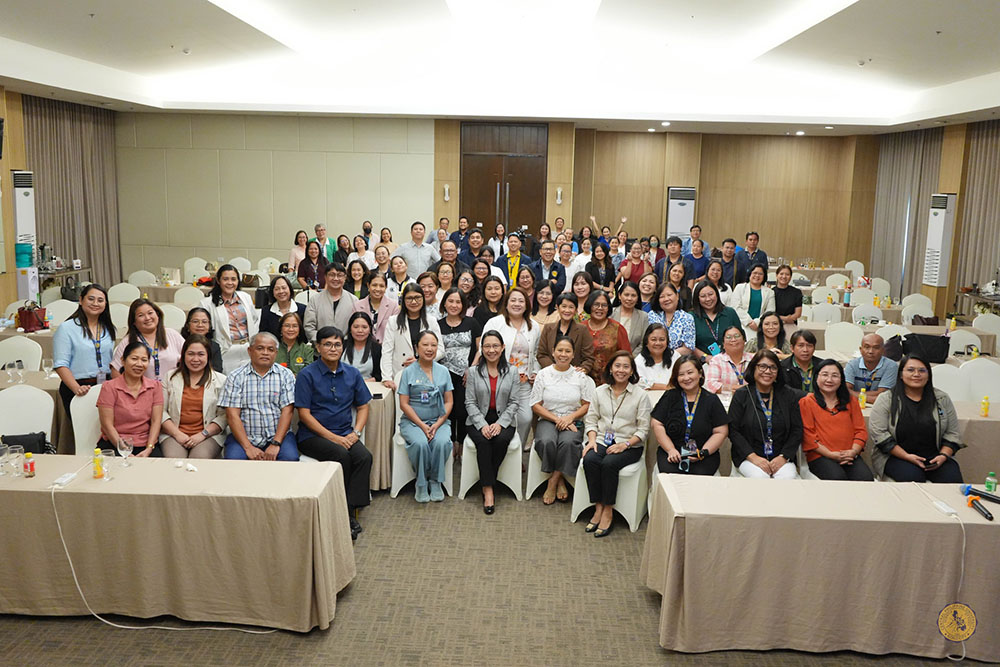
University administrators, deans, principals, and unit heads gather for a group photo following the successful conclusion of the two-day seminar-workshop at the Ballroom of Sam’s 21 Hotel, Diversion Road, Mandurriao, Iloilo City.
The Human Resource Development Office (HRDO), in coordination with the Review, Continuing Education and Consultancy Center (RCECC), successfully held a two-day seminar-workshop titled “Excellence in Leadership: Strengthening Productivity, Conflict Resolution, and Integrity in Decision-Making” on April 20–21, 2026, at the Ballroom of Sam’s 21 Hotel, Diversion Road, Mandurriao, Iloilo City.
The activity gathered university administrators, deans, principals, and academic and non-academic unit heads to strengthen leadership competencies and promote effective management practices across the institution.
The first day opened with registration, followed by an invocation led by Assoc. Prof. Rea Angelica F. Villeza, Department Chairperson for Religion and Ethics, and the singing of the national anthem. Engr. Dany C. Molina, Vice President for Administration, delivered the welcome remarks, emphasizing the importance of leadership development in advancing institutional goals.
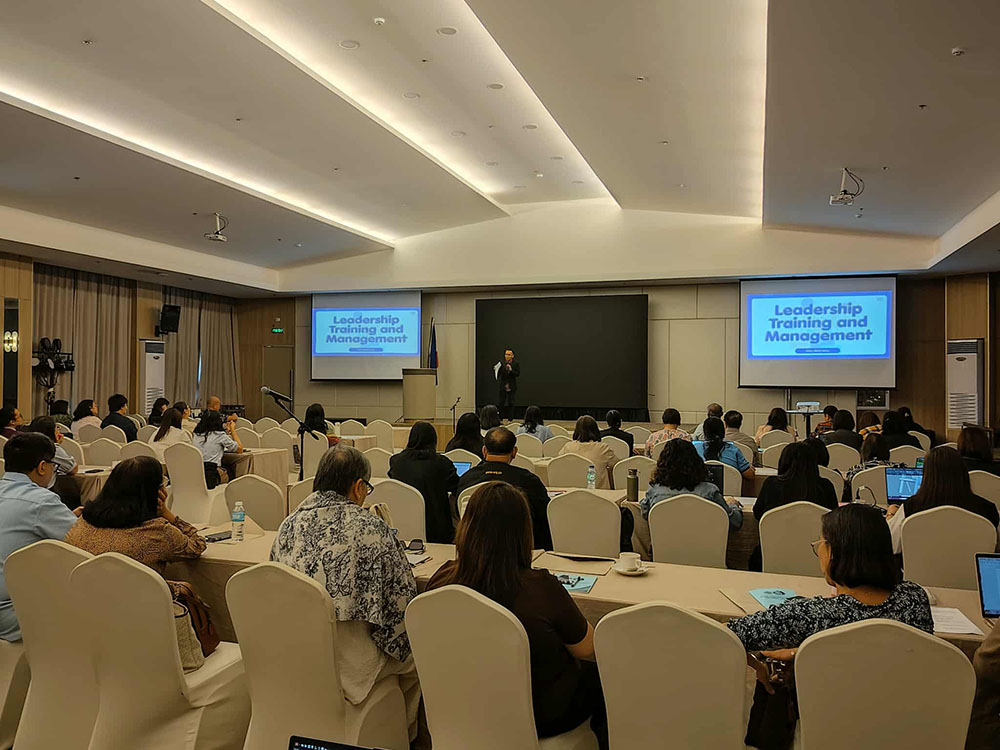
Atty. Albert Jan Matthew A. Java delivers a lecture on leadership training and management during the first day of the seminar-workshop titled “Excellence in Leadership: Strengthening Productivity, Conflict Resolution, and Integrity in Decision-Making.”
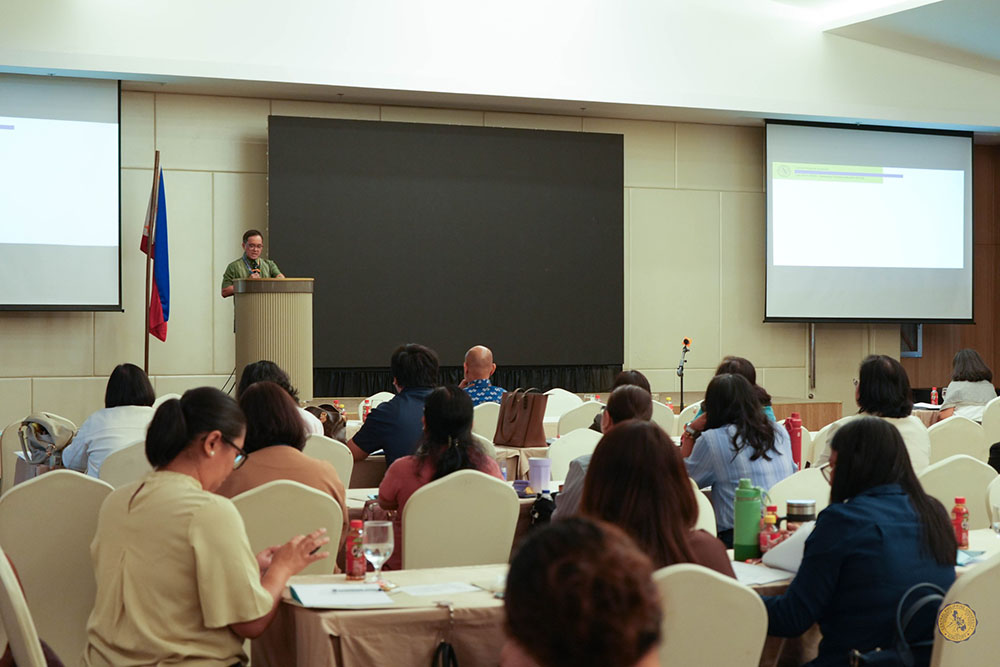
On April 20, during the afternoon session of the seminar-workshop, University President Rev. Dr. Ernest Howard B. Dagohoy leads a discussion on integrity in decision-making, emphasizing ethical leadership and accountability.
Dr. Lenny Rose P. Mucho, Director of RCECC, introduced the morning’s resource speaker, Atty. Albert Jan Matthew A. Java, CPA, MBA, who delivered a lecture on leadership training and management. His discussion focused on leadership styles and their application in organizational settings, equipping participants with practical strategies to lead teams effectively. This was followed by an open forum and workshop.
In the afternoon, University President Rev. Dr. Ernest Howard B. Dagohoy led a session on integrity in decision-making, emphasizing the critical role of ethical leadership in effective governance. He highlighted the importance of transparency, accountability, and moral discernment in addressing institutional challenges, urging university leaders to ground their decisions in principles that uphold trust and credibility within the academic community. Rev. Dr. Dagohoy also stressed that integrity must be consistently demonstrated not only in major decisions but also in everyday administrative actions.
This was followed by a discussion on the university’s organizational culture and the CPU Core Values—Faith, Character, Justice, Stewardship, and Excellence—led by Rev. Dr. Francis Neil G. Jalando-on, Director of the Office of Communications. He elaborated on how these values serve as guiding principles in shaping both personal conduct and professional responsibilities among university leaders. He also encouraged participants to intentionally integrate these core values into their leadership practices, particularly in fostering a culture of service, fairness, and accountability across their respective units.
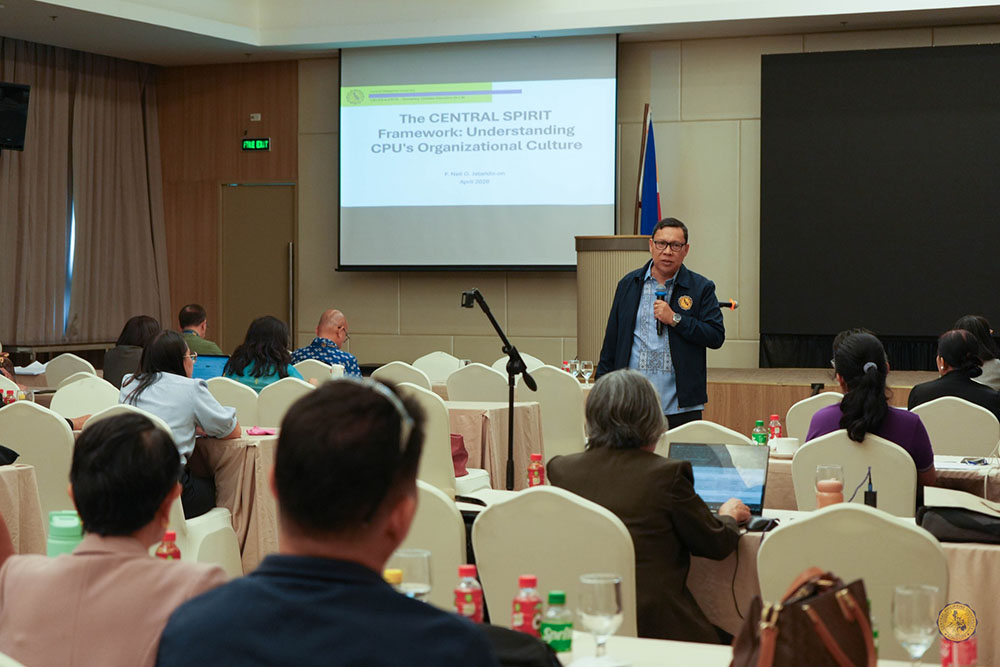
Rev. Dr. Francis Neil G. Jalando-on discusses the university’s core values and their role in shaping leadership practices.
Participants then engaged in an interactive workshop, where they applied the concepts discussed through case-based activities and group discussions. The workshop provided an opportunity for attendees to reflect on workplace scenarios, share insights, and develop practical strategies for upholding integrity and embodying the university’s core values in their decision-making processes.
The second day began with a devotional led by Rev. Dr. Cris Amorsolo V. Sian, Senior Pastor of the University Church. The morning session featured Andre L. Ladigohon, CPA, MPA, Assistant Regional Director of the Civil Service Commission Regional Office VI, who delivered an in-depth lecture on time management and workplace productivity. He underscored the importance of understanding behavioral patterns and how these influence individual performance and decision-making in the workplace. Drawing from concepts such as cognitive behavioral approaches, Ladigohon explained how mindset and habits shape productivity and emphasized the need to cultivate personal effectiveness through discipline, focus, and intentional action.
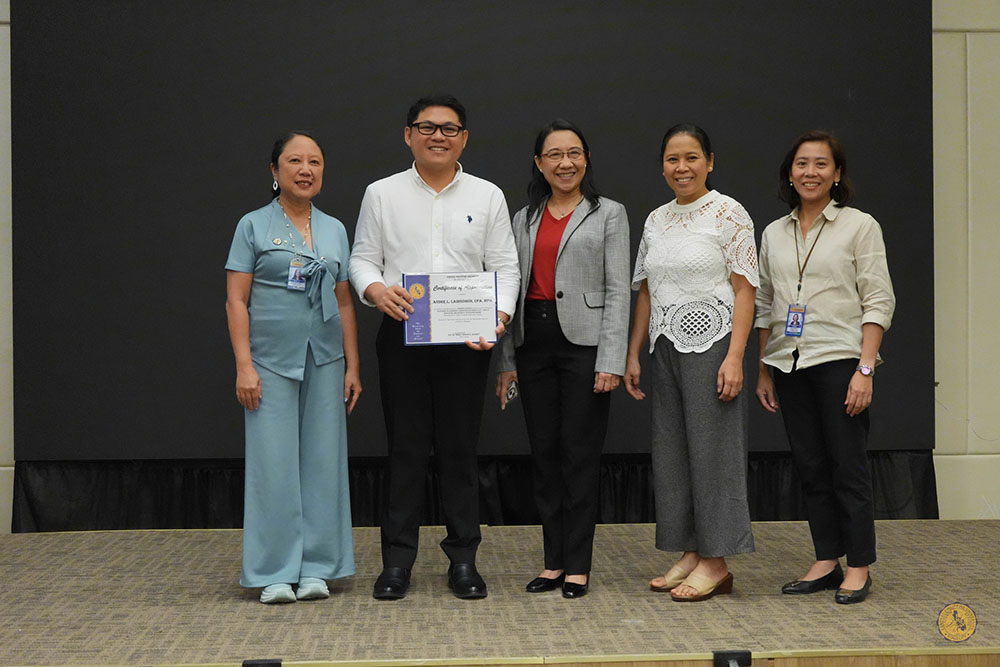
Andre L. Ladigohon (2nd from left), CPA, MPA, Assistant Regional Director of the Civil Service Commission Regional Office V, receives his Certificate of Appreciation together with university administrators during the morning session of the seminar-workshop titled “Excellence in Leadership: Strengthening Productivity, Conflict Resolution, and Integrity in Decision-Making.”
He further highlighted the value of responsibility and accountability, encouraging participants to develop the habit of personal responsibility as a foundation for professional growth. Ladigohon also introduced self-determination theory, stressing the role of intrinsic motivation, autonomy, and purpose in enhancing employee engagement and performance.
In discussing paradigm shifts in employee development, he pointed out the transition from traditional, task-oriented management to a more holistic “whole person” approach. This perspective, he explained, recognizes employees not only as workers but as individuals with diverse needs, motivations, and potential. He also emphasized the importance of employee empowerment, advocating for leadership practices that promote trust, collaboration, and shared responsibility in achieving organizational goals.
An open forum followed the session, providing participants the opportunity to raise questions, clarify key points, and share their own experiences related to workplace productivity and management practices.
In the afternoon, Dr. Darril F. Pamocol, Acting Director, Human Resource Development Office, delivered a lecture on conflict resolution in the workplace. He discussed factors that create conflict, including social dilemmas, competition, perceived injustice, and misperception, and presented strategies for achieving industrial peace through contact, cooperation, communication, and conciliation.
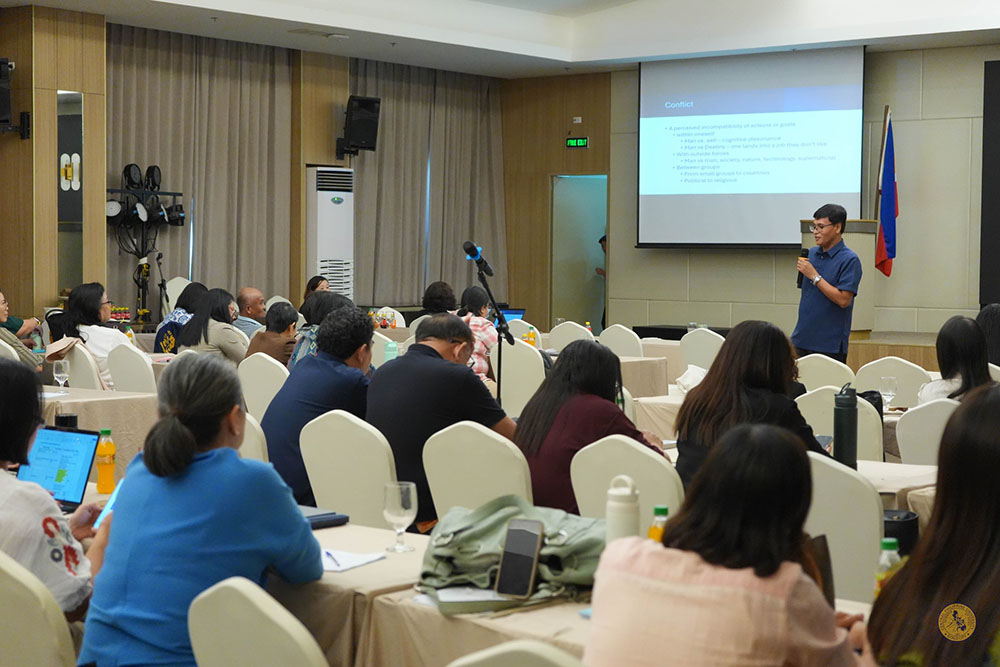
Dr. Darril F. Pamocol discusses conflict resolution strategies and the factors contributing to workplace conflict.
The seminar-workshop concluded with closing remarks delivered by Dr. Florence P. Bogacia, Vice President for Finance and Enterprises, who commended the participants for their active engagement throughout the two-day activity. She underscored the significance of continuous leadership development in sustaining institutional excellence and encouraged attendees to apply the knowledge and insights gained from the sessions in their respective units. She also emphasized the role of collaboration, accountability, and values-driven leadership in achieving the university’s long-term goals.
This was followed by the awarding of certificates and a closing prayer led by Assoc. Prof. Milanie C. Arandela, Dean of the College of Theology.
The two-day seminar-workshop reaffirmed the university’s commitment to cultivating effective, ethical, and values-driven leaders equipped to address the challenges of modern academic administration.