
By Dr. Joyce S. Wendam
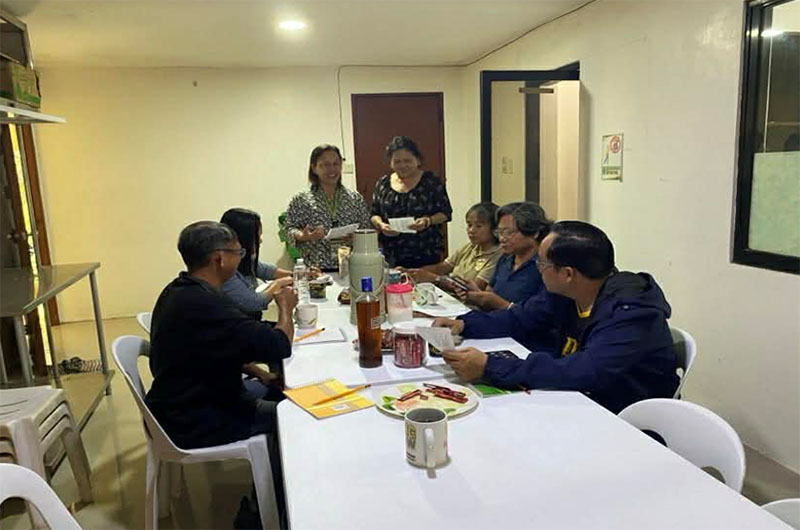
Ms. Nora T. Garpa, Head of the DA-Western Visayas Food Processing Laboratory, and Dr. Joyce S. Wendam, CARES-CESL Coordinator, briefed participants on how value addition can drive poverty alleviation, especially in Barangay Badiang, New Lucena, Iloilo.
The College of Agriculture, Resources, and Environmental Sciences (CARES) under the deanship of Dr. Jaime Cabarles, Jr, together with the CARES-CESL Coordinator, Dr. Joyce Wendam, resumed its outreach activities at Barangay Badiang, New Lucena, Iloilo, in partnership with the Department of Agriculture –Western Visayas (DA-WV).
A Hands-On Training on Rice Coffee & Wine Making was conducted last February 13, 2026, at the DA –WV Food Processing Laboratory at Western Visayas Integrated Agricultural Research Center (WESVIARC), Hamungaya, Buntatala, Jaro, Iloilo City to hone the skills of the farmers and barangay officials of Brgy. Badiang, New Lucena, Iloilo, led by its Barangay Chair, Hon. Randy P. Tolentino, together with the CARES-CESL Coordinator, Dr. Joyce S. Wendam.
This endeavor is in line with the goal and mission of Program ERNEST under the CESL Office, with Mr. Sarex Dalida Dipol, Jr. as the Director, which includes series of activities to be conducted at the CESL sites and to address the livelihood and enterprise development concerns of the community. This undertaking stemmed from the previous consultations which aimed to empower farmers with sustainable livelihoods to drive community-level poverty reduction.
The primary objective of this hands-on training is to capacitate participants on how to make rice coffee and rice wine as an intervention of the CARES-CESL in providing opportunities for community-based sustainable livelihoods and enterprise development. Furthermore, this aims to strengthen farmers’ economic resilience through sustainable agricultural practices to alleviate poverty.
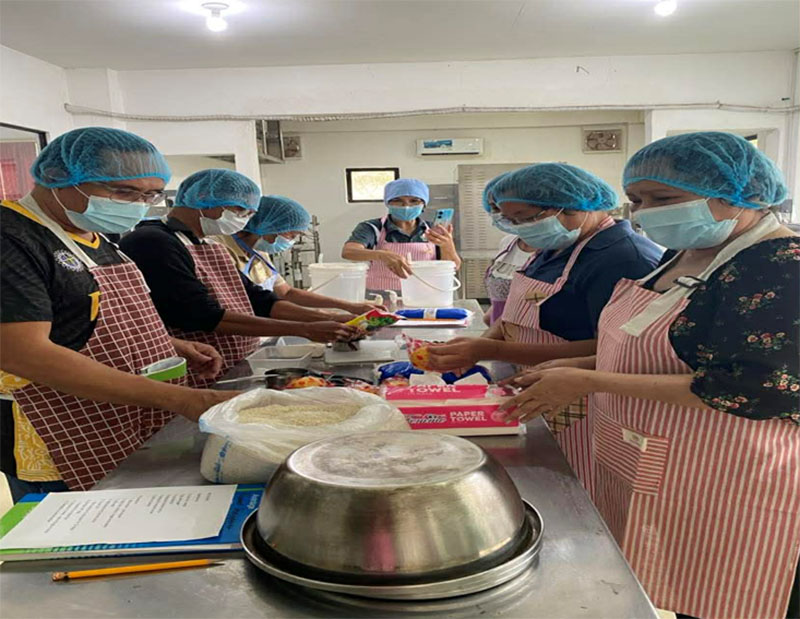
Farmers of Barangay Badiang, New Lucena, Iloilo are being empowered through hands-on training in rice coffee and wine making, a community-based sustainable livelihood initiative aimed at alleviating poverty.
This endeavor may also serve as a step for the students to actively participate and get involved in events concerning sustainable and resilient agriculture, livelihood undertakings, environmental concerns, and other related areas, in order to make an impact to continuously achieve corporate social responsibility and help maintain the good state of the community.
This laudable pursuit will advance the Sustainable Development Goals (SDGs) of the United Nations, where:
- SDG 1 (No poverty): This project promotes poverty reduction, which falls under SDG 1.
- SDG 2 (Zero hunger): This project promotes food security, which falls under SDG
- SDG 8 (Decent work and economic growth): This project promotes agripreneurship and job creation, which fall under SDG 8.
- SDG 12 (Responsible Consumption and Production): This project promotes sustainable production, which falls under SDG 12.
- SDG 13 (Climate Action): This project addresses climate change issues, which falls under SDG 13.
- SDG 17 (Partnerships for the Goals): This project promotes strong partnerships with the government and other private sectors, which falls under SDG 17.
By enhancing farmers’ skills and capabilities, connecting them to markets, and adopting sustainable technologies, the project aims to increase productivity, enhance farmer resilience, and uplift community well-being. This project serves as a model for community-based sustainable livelihoods and enterprise development. With sufficient support, it can empower farming households to become self-sufficient, resilient, and prosperous. This initiative aligns with the Program ERNEST, designed to empower smallholder communities through sustainable agricultural practices and innovations to drive community-level poverty reduction.