
By Mikee Natinga Norico
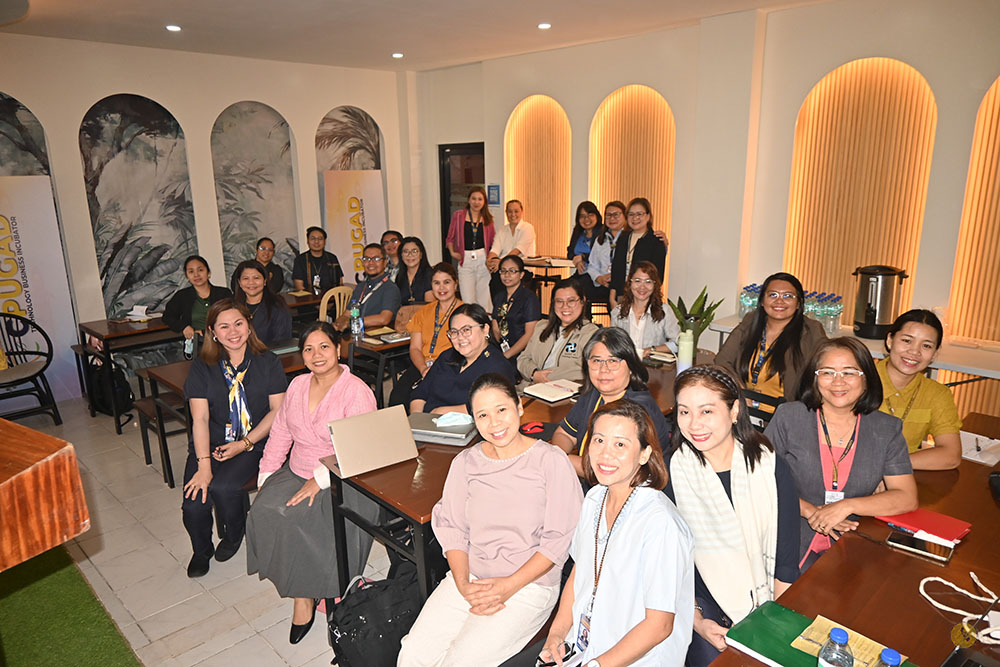
Participants of the Expertise Enhancement Lecture Series gather for a group photo at the CPUGAD TBI Co-Working Space following the insightful discussion on advancing faculty research and innovation.
Central Philippine University (CPU) reinforced its commitment to research and innovation as faculty members from various colleges gathered for the Expertise Enhancement Lecture Series under the WEAVE: Faculty Research and Development Capacity-Building Program. Held on January 8, 2026, at the CPUGAD TBI Co-Working Space, the event focused on “The Role of Artificial Intelligence in Advancing Faculty Research and Innovation.”
Hosted by the CPU Office of the Vice President for Research, Development, and Extension under the leadership of Dr. Aries Roda D. Romallosa, Acting Vice President for Research, Development, and Extension, the lecture series welcomed faculty researchers from the College of Agriculture, Resources, and Environmental Sciences; College of Education; College of Arts and Sciences; College of Computer Studies; College of Nursing; College of Business and Accountancy; and College of Engineering.
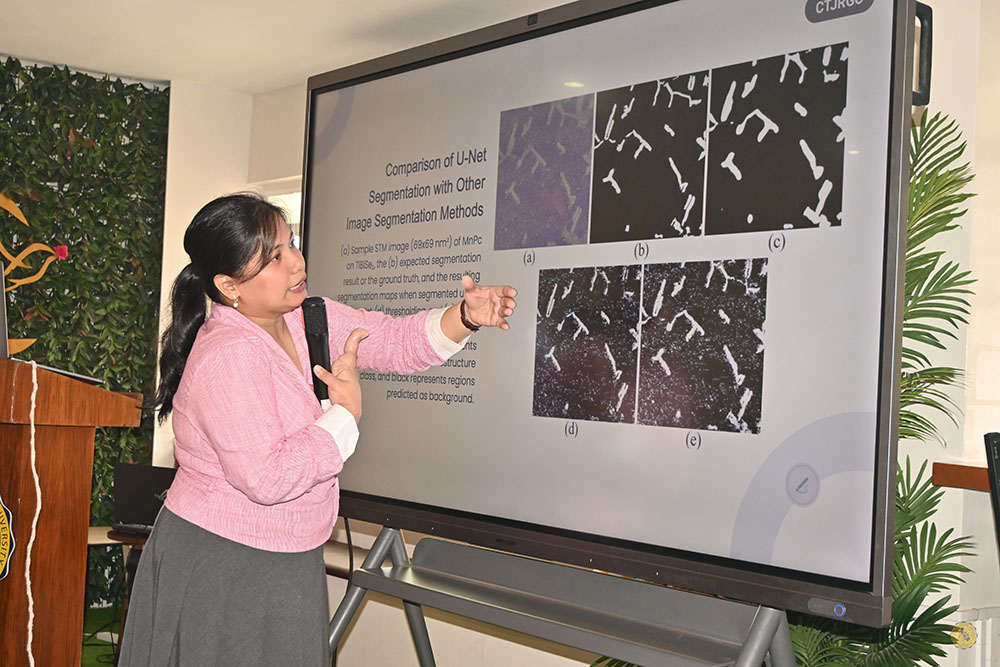 Dr. Ranzivelle Marianne Laygo Roxas-Villanueva delivers a lecture on the role of artificial intelligence in advancing faculty research and innovation during the Expertise Enhancement Lecture Series at the CPUGAD TBI Co-Working Space.
The lecture, delivered by Dr. Ranzivelle Marianne Laygo Roxas-Villanueva, Professor 12 of the Institute of Mathematical Sciences and Physics, University of the Philippines Los Baños, explored the transformative role of artificial intelligence (AI) in research. As a seasoned data scientist with extensive expertise in AI, data analytics, and computational methods, Dr. Roxas-Villanueva highlighted practical AI applications that can enhance research design, data analysis, and interpretation. She demonstrated how AI can facilitate interdisciplinary collaboration across fields, improve the production of publishable outputs, and strengthen the competitiveness of research proposals.
In her welcome message, Dr. Merle L. Junsay, Acting Vice President for Academic Affairs, emphasized the growing influence of AI in both academia and daily life. She encouraged faculty members to actively engage with the lecture, understand the potential of AI, and explore ways to integrate AI tools into their research agendas.
The half-day activity also featured a brief overview of the WEAVE program, an open forum for questions, mentoring discussions, and a synthesis session designed to foster collaborative research opportunities. During the mentoring time, the participants were able to collaborate with other units and discussed researchable topics for further enhancement prior to proposal submission for internal funding. The participants were encouraged to reflect on how AI-driven approaches can strengthen research proposals and funding competitiveness, particularly for early-career and emerging faculty.
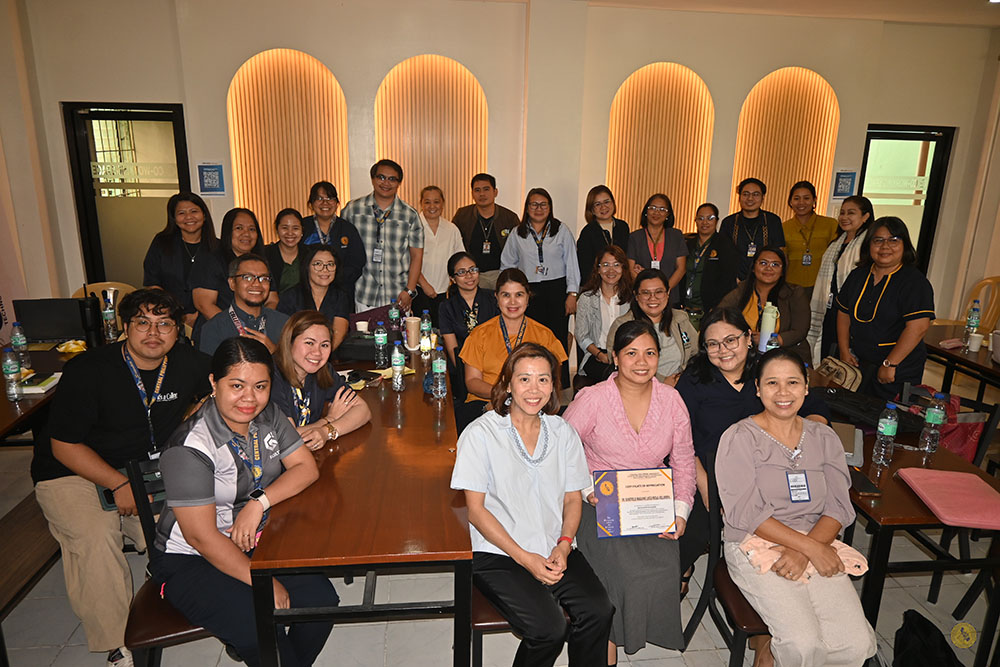
Participants and resource speaker Dr. Ranzivelle Marianne Laygo Roxas-Villanueva commemorate the successful AI-focused lecture series with a group photo.
Participation in the lecture benefited faculty by introducing practical AI applications that enhanced research design, data analysis, and interpretation; demonstrating how AI supported interdisciplinary and collaborative research across fields; and equipping new-generation faculty with emerging competencies necessary for innovation-driven research and funding readiness.
Dr. Evelyn Grace D. Ayson, Director of the University Research Center, delivered the closing message, underscoring the importance of equipping faculty with emerging competencies for innovation-driven research.
The Expertise Enhancement Lecture Series on AI is the first of many lectures and engagements delivered by external experts designed to capacitate faculty researchers in order to advance the university’s research initiatives, ensuring that CPU researchers remain at the forefront of global trends in innovation and technology.