By Asst. Prof. Sarex Dalida Dipol, Jr.
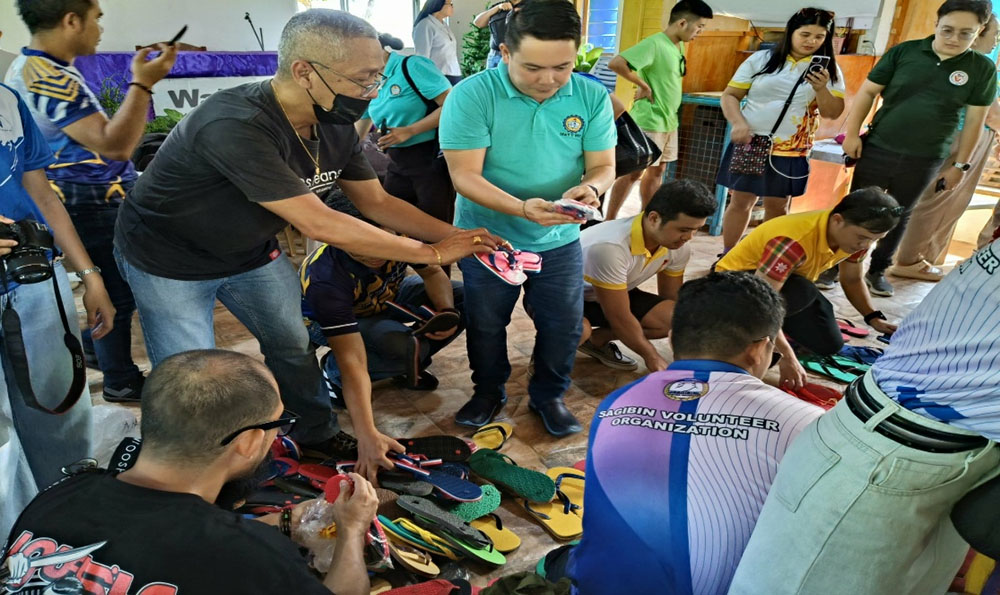
Prof. Kerwin G. Luntao (black), outreach coordinator and faculty member of the CPU College of Arts and Sciences, joins volunteers from various higher education institutions in preparing donations for the children of the Ati Community.
On November 29–30, 2025, various higher education institutions in Western Visayas conducted an integrative outreach activity in the Ati Community in Boracay Island, Malay, Aklan. This initiative formed part of the kickoff ceremony for the National Volunteer Month celebration. The University’s Outreach Week was also anchored on this nationwide observance. During National Volunteer Month, various government and non-government organizations are encouraged to initiate and coordinate diverse volunteer activities.
Aside from Central Philippine University, several other higher education institutions participated in this initiative, including Aklan State University, Capiz State University, Iloilo Science and Technology University, Iloilo State University of Fisheries Science and Technology, Northern Iloilo State University, Guimaras State University, St. Paul University–Iloilo, University of Antique, University of San Agustin, and West Visayas State University. The Department of Agriculture–National Dairy Authority and the Kiwanis Club of Boracay also joined the outreach activity. Meanwhile, the Department of Economy, Planning and Development–Philippine National Volunteer Service Coordinating Agency served as the host of the activity.
During the outreach, community members received hygiene kits, school supplies, dairy products, slippers, and cash assistance, among other essential items. The activity also served as a valuable platform to discuss the island’s historical state before its massive development and to identify the current challenges faced by the community, where, according to community representatives, they continue to struggle to obtain their Certificate of Land Ownership Award (CLOA) from the government.
After the activity, the members of the volunteer consortium identified possible ways to raise the concerns of the indigenous people’s community, particularly their requests for the issuance of land ownership certificates and for reliable access to electricity and night lighting.