By Jaren Marr P. Jaco
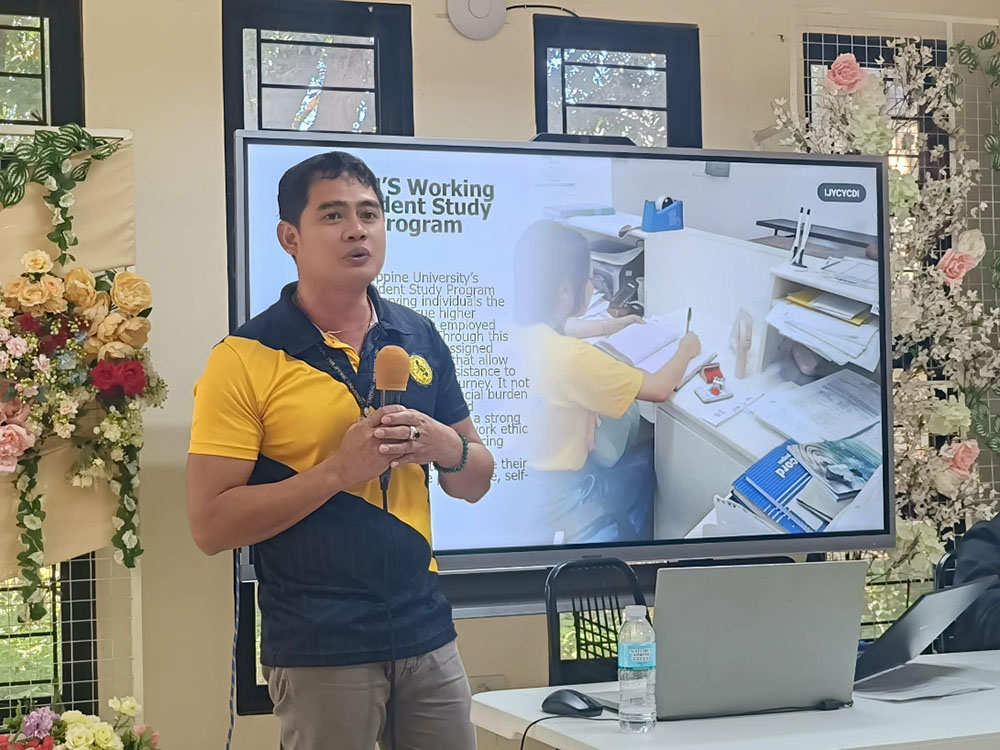
Asst. Prof. Sarex Dalida Dipol, Jr., Director of the CPU–Community Engagement and Service-Learning Center, showcased CPU’s Volunteerism and Social Development Initiatives to the Western Visayas Volunteerism Consortium.
On December 2, 2025, selected higher education institutions (HEIs) in Western Visayas shared their volunteerism efforts, community engagement programs, and social development initiatives with other HEIs in the region. This activity, organized by the Philippine National Volunteer Service Coordinating Agency (PNVSCA), forms part of the National Volunteer Month celebration. The event was hosted by the Northern Iloilo State University–West Campus in Estancia, Iloilo.
During the program, he emphasized that extension is one of the mandated functions of higher education institutions in the Philippines, alongside instruction and research. He noted that extension work serves as an essential mechanism for transferring knowledge, skills, and technology toward community development, as stipulated in Republic Act No. 7722, also known as the Higher Education Act of 1994. He also served as one of the consultants on the development of the Student Volunteers Manual, which various higher education institutions across the country will use.
Asst. Prof. Dipol highlighted several of CPU’s key social development initiatives, including the CPU–Arukahik Tailoring Shop and Training Center, Family Wellness Center, University Legal Clinic, KABALAKA Reproductive Health Center and Birthing Center, Center for Philippine Native Chicken, Project ETC, CPU’s Working Student Study Program, Center for Mangroves and Marine Biodiversity Conservation, and the newly established CPU–Kinaadman Reading Development and Diagnostic Services, among others. He likewise emphasized the University’s community-adoption framework—the Program ERNEST—which stands for Education, Resource Utilization, Nurturance, Environment, Social Welfare, and Technology Transfer.
Other participating HEIs also shared their volunteerism and social development initiatives, particularly in disaster risk reduction and management, environmental conservation, alternative livelihood programs, and capacity building. This activity serves as a vital platform for improving the extension programs and community engagement efforts of higher education institutions across the region.